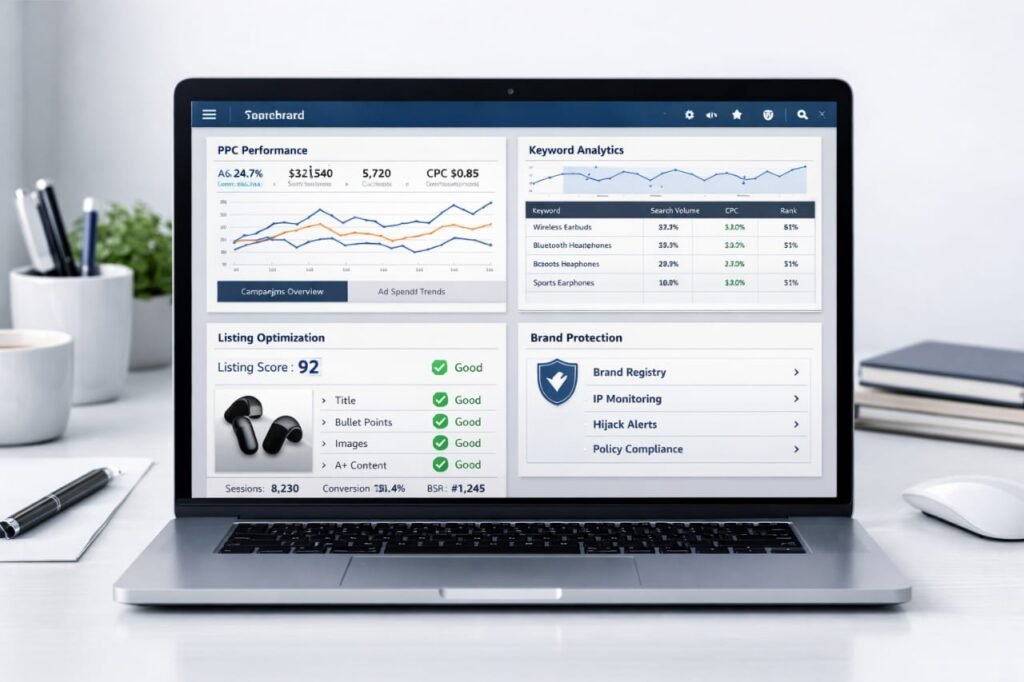
Amazon as an Operating System How Modern Brands Engineer Predictable Growth
Amazon as an Operating System How Modern Brands Engineer Predictable Growth
Introduction:
Amazon is no longer simply a marketplace where products are listed and purchased. It has evolved into a complex commercial environment that functions more like an operating system for digital brands. Just as a computer operating system manages resources processes and scalability Amazon manages visibility demand conversion logistics and customer trust. Modern brands that understand this shift do not treat Amazon as a sales channel but as an integrated system that governs how growth is engineered measured and sustained.
In earlier stages of ecommerce success was often driven by tactical execution such as keyword stuffing aggressive discounting or short term advertising pushes. While these methods can still generate temporary wins they rarely create durable growth. Today the brands that scale predictably are those that architect their Amazon presence as a system where data feedback loops operational discipline and decision frameworks replace guesswork.
This article explores Amazon as an operating system and explains how advanced brands design predictable growth by aligning strategy technology and execution within this ecosystem.
Understanding Amazon as a System Rather Than a Marketplace:
An operating system coordinates multiple components to deliver consistent performance. Amazon performs a similar function for brands by orchestrating traffic allocation ranking algorithms fulfillment infrastructure pricing dynamics and customer experience. Each element interacts with the others in real time. A change in one area such as inventory availability or ad efficiency can immediately impact discoverability conversion and organic rank.
Brands that treat Amazon as a static shelf often struggle because they respond reactively to metrics rather than proactively designing systems. In contrast system oriented brands view every Amazon input as part of a controlled environment. They understand that rankings are not random but the output of structured signals including relevance performance reliability and customer satisfaction.
This perspective changes how decisions are made. Instead of asking how to increase sales this week the question becomes how to design a system that compounds performance month after month.
The Core Layers of the Amazon Operating System:
To engineer predictable growth brands must understand the foundational layers that power Amazon performance. Each layer builds on the previous one and weaknesses at any level can limit scalability.
Demand Layer:
Demand on Amazon is not created equally. Search intent is explicit and transactional which means traffic quality is high but competition is intense. Advanced brands invest heavily in understanding search behavior at a granular level. This includes mapping primary secondary and tertiary keyword intent as well as analyzing seasonality price sensitivity and category trends.
Rather than chasing volume brands focus on demand alignment. This means ensuring that the product value proposition listing structure and pricing strategy precisely match buyer intent. When demand alignment is strong conversion improves which in turn strengthens organic visibility.
Discovery Layer:
Amazon controls discovery through its ranking systems. Visibility is earned not given. Discovery is influenced by relevance performance metrics ad velocity and historical consistency. Brands that scale predictably do not rely on one time launches or artificial traffic spikes. They engineer discovery through controlled momentum.
This includes structured launch sequencing gradual bid scaling and continuous relevance optimization. The goal is to signal stability to the system rather than volatility. Predictable discovery comes from repeatable execution not from aggressive manipulation.
This article explores how elite Amazon brands are architected for long term scale.
Written for founders who build systems not short term tactics.
Get a free Amazon growth auditConversion Layer:
Conversion is where brand positioning and operational excellence intersect. High performing listings are not just keyword optimized they are engineered for clarity trust and persuasion. Advanced brands treat listings as conversion assets not static content.
Every element from image sequencing to copy hierarchy and social proof is designed to reduce friction. Conversion rate is one of the strongest signals Amazon uses to determine ranking sustainability. Brands that win here create a compounding effect where higher conversion drives better visibility which further increases traffic quality.
Fulfillment and Reliability Layer:
Amazon prioritizes reliability because it directly impacts customer trust. Inventory availability fulfillment speed and order accuracy are non negotiable. Brands that experience frequent stockouts or fulfillment delays introduce instability into the system.
Advanced operators design inventory systems that prioritize continuity over short term cost savings. They forecast demand conservatively maintain buffer stock and align promotions with supply capacity. Reliability signals reinforce ranking stability and protect long term performance.
Feedback and Data Layer:
Amazon provides an immense amount of data but raw data alone does not create insight. Predictable growth comes from structured interpretation. System driven brands build feedback loops where performance metrics inform strategic adjustments.
Rather than reacting to daily fluctuations they track leading indicators such as session quality conversion elasticity and advertising efficiency trends. This allows for proactive optimization rather than reactive firefighting.
Strategic Trade Offs of a System First Amazon Business
| Advantages | Challenges | |
|---|---|---|
| Predictable Growth System led brands scale through repeatable decision frameworks rather than unstable short term wins. | Higher Upfront Planning Effort Designing systems requires deeper thinking before visible results appear. | |
| Operational Stability Clearly defined systems reduce chaos allowing teams to perform consistently as the business grows. | Slower Initial Momentum Early growth may feel controlled rather than aggressive compared to tactical approaches. | |
| Resilience Against Algorithm Changes Architected businesses adapt faster because strategy guides response instead of panic reactions. | Requires Strategic Discipline Long term consistency is required which many sellers find difficult to maintain. | |
| Founder Leverage Founders move from daily execution to strategic oversight without losing control. | Not Suitable for Shortcut Mindsets This model does not reward rapid wins without foundational structure. |
Decision Frameworks That Replace Guesswork:
One of the defining characteristics of system first brands is the use of decision frameworks. These frameworks reduce emotional decision making and create consistency across teams.
For example advertising decisions are not based on intuition but on predefined thresholds for profitability scalability and ranking impact. Pricing changes follow structured elasticity testing rather than panic driven discounting. Listing updates are planned and measured rather than continuously tweaked.
Decision frameworks allow brands to scale because they make performance repeatable. When outcomes are predictable resources can be allocated confidently and growth becomes engineered rather than hoped for.
Advertising as a Control Mechanism Not a Growth Crutch:
Many brands misuse Amazon advertising as a substitute for strategy. They increase spend to compensate for weak listings poor positioning or inventory issues. System oriented brands use advertising differently.
Advertising is treated as a control mechanism that manages demand flow rather than an isolated growth lever. Sponsored placements are used to stabilize ranking during competitive pressure accelerate discovery for new products and defend brand real estate.
Advanced advertisers segment campaigns by intent lifecycle and profitability. They understand that not all traffic should convert at the same efficiency and that some spend is strategic rather than immediately profitable. This nuanced approach prevents overspending while supporting long term visibility.
Brand Equity Inside the Amazon Ecosystem:
While Amazon controls much of the customer relationship brand equity still matters. Predictable growth is easier for brands that command trust recognition and perceived value. Brand equity improves conversion resilience reduces price sensitivity and increases repeat purchase behavior.
System driven brands invest in consistent visual identity messaging discipline and post purchase experience. They leverage brand stores enhanced content and customer engagement tools to reinforce positioning. Over time this creates an internal moat that protects against copycats and price wars.

Scaling Without Breaking the System:
One of the most common mistakes brands make is scaling too aggressively. Sudden traffic surges price drops or expansion into new markets can destabilize performance if the underlying system is not ready.
Advanced brands scale in phases. They validate performance at each level before increasing complexity. This might mean stabilizing one category before expanding into adjacent niches or perfecting domestic logistics before international expansion.
Scaling is treated as an engineering problem rather than a marketing push. Capacity constraints are identified in advance and addressed methodically.
Long Term Strategic Advantage of a System First Approach:
Treating Amazon as an operating system creates long term strategic advantage. It allows brands to weather algorithm changes competitive pressure and market volatility. Because performance is driven by fundamentals rather than hacks it is more resilient.
System first brands also gain optionality. They can launch new products more efficiently expand into new regions with confidence and leverage data insights across channels. Amazon becomes not just a revenue source but a strategic asset.
Conclusion:
Amazon has evolved into a sophisticated operating system that governs how digital commerce functions. Brands that recognize this shift and design their presence accordingly unlock predictable scalable growth. By focusing on system architecture rather than isolated tactics modern brands replace volatility with control and uncertainty with structure.
Predictable growth on Amazon is not the result of secret tricks or aggressive shortcuts. It is the outcome of disciplined execution decision frameworks and a deep understanding of how the system rewards consistency relevance and reliability. In an increasingly competitive landscape the brands that engineer growth will always outperform those that chase it.
Is it possible for small brands to adopt a system first approach on Amazon?
Does treating Amazon as an operating system reduce flexibility?
How long does it take to see results from a system driven Amazon strategy?
-
Mary
- December 21, 2025
- 7:36 pm
- Reading time 5 min
Recent Posts
- All Post
- Amazon Compliance
- Amazon FBA Guide
- amazon market analysis
- Amazon PPC
- Amazon Stock
- Amazon Tools
- Business Strategy
- Ecommerce News & Analysis
- Full Account Management Services
- Guide
- Guide 2025
- News
- News 2026
- PPC Services
- Prime day
- Stories
- Team Memebers
- Technology and Digital Services
- Top Agencies
- Top PPC tools
- Why we are Unique?


Get a Quick Solution
Need help fast? Our expert team is here to provide you with efficient and reliable solutions tailored to your needs. Don’t wait—reach out today!
Categories
- Amazon Compliance (5)
- Amazon FBA Guide (6)
- amazon market analysis (2)
- Amazon PPC (30)
- Amazon Stock (1)
- Amazon Tools (17)
- Business Strategy (12)
- Ecommerce News & Analysis (6)
- Full Account Management Services (106)
- Guide 2025 (20)
- News 2026 (16)
- PPC Services (58)
- Prime day (2)
- Technology and Digital Services (1)
- Top PPC tools (1)
- Why we are Unique? (11)
Subscribe for Growth Tips, Seller Hacks & eCom Wins