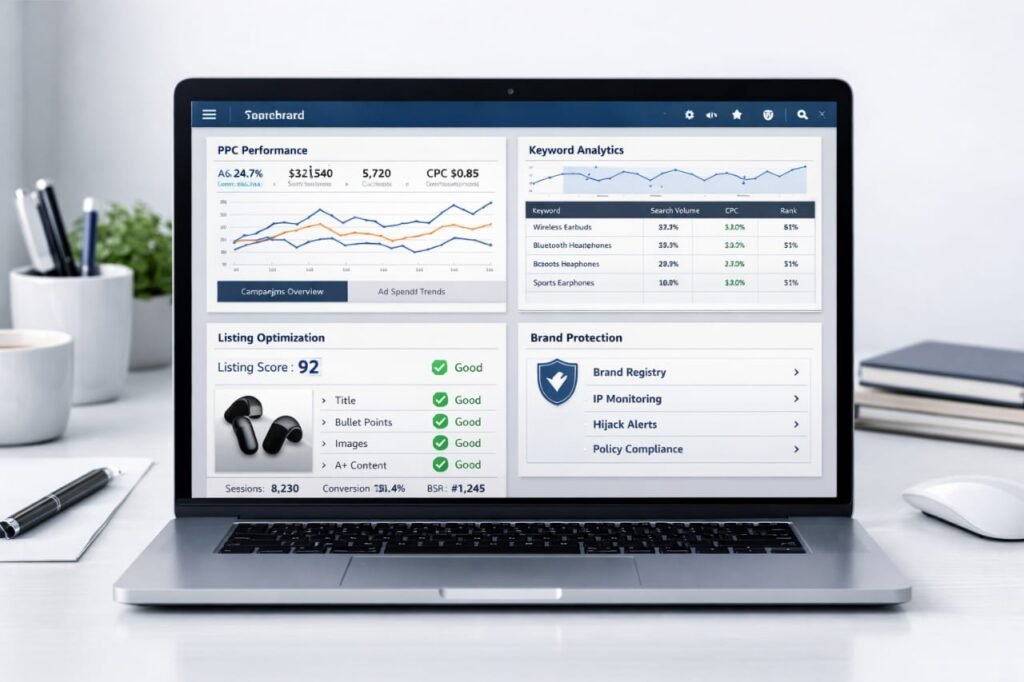
Keep Your Amazon Store in Stock Proven FBA Inventory Management Tips
Keep Your Amazon Store in Stock Proven FBA Inventory Management Tips
Introduction:
Running a profitable Amazon FBA business demands far more than listing high quality products and optimizing keywords. The real challenge that separates average sellers from top tier brands lies in one critical operational skill. Inventory management. A skill that influences your Buy Box performance, search ranking, advertising efficiency, customer satisfaction, and your overall financial stability. While inventory might appear to be a routine supply chain function, on Amazon it becomes a strategic discipline that requires accurate forecasting, strong data literacy, and precise operational timing.
Amazon rewards sellers who consistently maintain stock availability. At the same time it penalizes stock outs, excessive storage, and inefficient replenishment cycles. Many sellers learn this lesson after losing significant revenue because they underestimated demand or over ordered and accumulated long term storage fees. Advanced FBA sellers approach inventory scientifically. They study trends, build forecasting models, maintain structured reorder systems, measure operational performance, and continuously refine the logistics chain.
This comprehensive guide delivers detailed insights on advanced FBA inventory management. You will learn how to build forecasting systems, reduce stock out risk, master inventory health metrics, manage seasonality, optimize lead times, coordinate suppliers, and leverage Amazon native tools for maximum operational control. Whether you run a small FBA store or a multi brand portfolio, these strategies will help you maintain consistent stock availability, reduce financial waste, and build a resilient and scalable Amazon business.
The Strategic Role of Inventory in Amazon FBA:
Inventory is more than physical product sitting in a warehouse. On Amazon it is a source of ranking power, operational stability, and brand credibility. Before diving into advanced strategies it is essential to understand why inventory management matters at a fundamental level.
Inventory Drives Amazon Search Ranking:
Amazon search ranks products based on relevance, conversion performance, and fulfillment reliability. When a product goes out of stock Amazon reduces its ranking because the listing cannot generate sales. Even temporary stock outs can cause a long term ranking decline because Amazon’s algorithm reallocates exposure to competing products.
Maintaining consistent stock availability ensures stable sales velocity, which is a major ranking signal. A strong replenishment cycle therefore becomes a direct contributor to organic search performance.
Inventory Influences Buy Box Eligibility:
The Buy Box determines which seller receives the sale when multiple sellers offer the same product. Amazon considers performance metrics such as fulfillment method, price consistency, order defect rate, and stock reliability. Sellers who frequently lose stock experience reduced Buy Box share. Amazon prioritizes sellers who demonstrate consistent product availability and rapid fulfillment speed.
Inventory Affects Financial Efficiency:
Overstocking leads to increased storage fees including long term storage charges. Understocking leads to lost sales and wasted advertising spend. The optimal inventory position is a balance between maintaining availability and minimizing carrying costs. Expert sellers treat this balance as an ongoing financial optimization problem rather than a one time setup.
Inventory Strengthens Customer Experience:
Fast delivery depends on having the product available in an Amazon warehouse near the customer. Stock outs force delays, cause listing suppression, or drive customers to competing brands. Inventory consistency directly influences customer satisfaction ratings and repeat purchase behavior.
Understanding the strategic value of inventory sets the foundation for more advanced systems and practices that keep your Amazon business resilient and scalable.
Mastering Demand Forecasting With Advanced Techniques:
Accurate forecasting is the core of strong inventory planning. Many sellers rely on simple reorder timing which fails when demand shifts. Advanced forecasting uses data analytics and structured modeling. The goal is to predict sales volume with high reliability so inventory decisions are based on evidence rather than guesswork.
Section One. Build a Multi Variable Forecasting Model
A robust forecasting model contains the following components.
Monthly and Weekly Sales Velocity:
Analyze at least twelve months of historical sales data. Break it down by week to identify trends. Weekly velocity shows real time performance while monthly velocity smooths volatility.
Seasonality Patterns:
Seasonal spikes occur during holidays, Q4, back to school periods, and niche specific events. The model should adjust predicted demand based on past seasonal behavior. For example a sporting goods product might peak in summer while a gift item peaks during Q4.
Trend Analysis:
Some products experience gradual upward or downward trends. A model that assumes flat velocity will miscalculate demand. Identify long term trend direction by comparing quarter over quarter growth.
External Factors:
Review competitive landscape, price fluctuations, advertising changes, supply chain constraints, and product lifecycle stage. Newly launched products require different forecasting logic compared to established ones.
Statistical Forecasting Methods:
Advanced sellers use forecasting methods such as exponential smoothing, time series decomposition, and moving averages. Tools like Forecastly, SoStocked, Helium 10, and DataHawk can automate these calculations.
Rolling Forecast Adjustments:
Update your forecast weekly. Amazon is a fluid environment where demand changes quickly. A rolling system recalibrates expected demand every seven days for maximum accuracy.
Forecast at the SKU Level Not at the Store Level:
Many sellers forecast at the store level and allocate inventory intuitively across products. This results in uneven stock positions. Every SKU requires an independent model because variations in demand patterns make store level forecasting inaccurate.
Use a Dual Forecasting System:
Advanced sellers maintain two forecasting models.
Baseline Forecast
A conservative estimate used for financial planning.
Optimistic Forecast
A growth based projection used for aggressive replenishment when demand surges.
This dual approach keeps sellers protected from both overstock and stock out risk.
If you would like a customized strategy for your Amazon business, you can request a detailed quote from our expert team.
Understanding Amazon Inventory Health Metrics:
Amazon provides several metrics that directly influence account health and fulfillment efficiency. Advanced sellers monitor these metrics weekly.
Inventory Performance Index:
The Inventory Performance Index is a score that measures storage efficiency, excess inventory, sell through rate, stranded inventory, and restock rates. Poor IPI scores can limit your storage capacity and lead to additional fees. Improving this score requires consistent sales velocity and regular removal of unproductive inventory.
Sell Through Rate:
Sell through rate equals units sold divided by units available during a specified time period. A strong sell through indicates high demand and efficient stock movement. A weak rate suggests overstocking or poor listing performance. Monitoring this ratio helps determine when to adjust pricing or advertising.
Excess Inventory Percentage:
Amazon labels inventory as excess when projected sales velocity shows that existing stock will take longer than necessary to sell. This triggers higher storage fees. Reducing excess inventory requires either promotional pricing, increased advertising, or removal orders.
Restock Limits:
Amazon controls how many units you can send to the warehouse based on performance. Sellers must maintain a balanced inventory cycle to avoid restock restrictions which can severely reduce Q4 opportunity.
Stranded Inventory:
Stranded inventory occurs when products are in the warehouse but not available for purchase due to listing errors, compliance problems, or inactive status. This disrupts inventory accuracy and increases fees. Regular audits help prevent these issues.
Monitoring these metrics ensures that inventory decisions support Amazon’s operational expectations and maintain selling privileges.
Building a Reliable Replenishment System:
Forecasting reveals how much you need. Replenishment determines when to order and ship inventory. The goal is to build a predictable system that avoids emergency restocking.
Calculate the Reorder Point:
Reorder Point equals average daily sales multiplied by lead time plus safety stock. This formula ensures inventory is ordered early enough to prevent stock out. Lead time includes production, packaging, quality checks, freight, customs, and Amazon check in time.
Establish Safety Stock Buffers:
Safety stock is an emergency reserve used for unexpected spikes in demand or supplier delays. The buffer size depends on volatility. Products with stable sales need smaller safety stock. Seasonal or promotional products require larger buffers.
Use Lead Time Variability Analysis:
Lead time is never constant. Analyze variation in supplier turnaround, freight transit, and Amazon receiving time. Use the longest realistic lead time for planning rather than average lead time.
Adopt a Just In Time but Risk Adjusted System:
Traditional just in time inventory minimizes storage but increases stock out risk. Advanced sellers use a hybrid approach where inventory is lean but supported by safety stock to protect ranking and Buy Box performance.
Maintain a Replenishment Calendar:
A replenishment calendar improves discipline and timing. Schedule weekly reviews for the following tasks.
- Check weekly velocity and adjust forecast
- Review inventory health
- Confirm production status with suppliers
- Plan shipping for the month
- Schedule promotional activity that may influence demand
A structured calendar ensures nothing is overlooked.
Fast Processing
Get your Amazon strategy evaluated quickly by experts.
Customized Plans
Receive personalized inventory and growth recommendations.
Expert Support
Work with a team experienced in advanced Amazon operations.
Supplier Coordination and Production Management:
Suppliers play a crucial role in inventory reliability. Advanced sellers treat supplier management as an ongoing operational partnership.
Diversify Supplier Base:
Working with one supplier for a high volume SKU creates risk. Supply chain disruptions, factory shutdowns, holiday delays, and political events can halt production. Maintaining two suppliers for key products reduces dependency and improves negotiation leverage.
Implement Production Deadlines:
Establish firm production timelines with clear expectations. Break the production cycle into phases including material procurement, manufacturing, quality checks, packaging, and shipment readiness. Request photographic or video progress updates for accountability.
Use Inspection Services:
Third party inspections verify product quality before shipment. This protects inventory reliability by reducing the chances of receiving defective units which may require removal or disposal.
Measure Supplier Reliability Score:
Rate suppliers on production accuracy, delay frequency, defect rate, cost stability, and communication speed. Sellers should maintain an internal supplier performance scorecard to guide long term decisions.
Negotiate Flexible Payment Terms:
Flexible payment terms improve cash flow and allow for more aggressive inventory ordering. Options include paying partial deposits, milestone payments, and final payment upon inspection approval.
Strong supplier coordination ensures inventory arrives on time and prevents supply disruptions.
Freight Optimization and Shipment Strategy:
Shipping is a major component of inventory timing. Delays in freight cause stock outs and wasted advertising spend. Optimizing shipment strategy strengthens your replenishment cycle.
Understand Freight Modes:
Air Freight:
Fast but expensive. Suitable for emergencies or high value lightweight products.
Sea Freight:
Cost efficient for large shipments but slower. Requires planning several weeks ahead.
Express Courier:
Useful for small shipments or urgent replenishments.
Adopt a Split Shipment Strategy:
Instead of sending the entire batch by sea freight, send a small quantity by air. This prevents stock outs while the main shipment travels slowly. Many advanced sellers use this split approach during peak seasons.
Optimize Container Utilization:
Partially filled containers increase shipping cost per unit. Use consolidation services or reorder planning to maximize container efficiency.
Track Amazon Check In Time:
Amazon receiving delays vary by warehouse and season. Use historical data to adjust your inbound timing strategy. During Q4 send shipments earlier to avoid congestion.
Automate Shipment Workflow:
Use tools that automate carton labels, pallet labels, shipment creation, and tracking updates. Workflow automation reduces errors and speeds up your logistics chain.
Managing Seasonality and Promotional Demand:
Demand is rarely stable. Prime Day, Black Friday, Cyber Monday, and holidays produce large spikes. To maintain stock during these events sellers must anticipate demand and adjust forecasting models accordingly.
Build a Seasonal Demand Map:
A seasonal map charts monthly expected demand based on historical performance. Use three years of data where possible. Identify months of peak demand and months of slow movement.
Increase Safety Stock Before High Traffic Events:
Prime Day and Q4 require larger safety stock buffers. Running out of stock during major traffic periods can cause long term ranking damage.
Sync Inventory With Advertising Strategy:
If you plan to scale advertising you must scale production accordingly. Many sellers increase ad spend and unknowingly cause a stock out. Advertising decisions should never be made in isolation from inventory forecast.
Analyze Competitor Behavior:
Competitors may stock out during high demand periods. Maintaining availability gives you market share advantage. Review competitor inventory patterns using third party tools.
Manage Post Peak Inventory:
Once a seasonal period ends reduce reorder volume to avoid excessive leftover inventory. Use clearance pricing if necessary to maintain storage efficiency.
Conclusion:
Inventory management is the backbone of a successful Amazon FBA business. It influences search ranking, Buy Box share, customer satisfaction, profitability, and long term brand scalability. Advanced sellers treat inventory as a strategic advantage rather than a routine supply chain task. They build precise forecasting systems, maintain disciplined replenishment cycles, use data for decision making, automate operations, and coordinate deeply with suppliers and logistics partners.
The most profitable Amazon stores are the ones that never run out of stock because they understand that availability equals visibility. By applying the advanced inventory strategies covered in this guide you will strengthen your operational resilience, protect your market position, and create a long term growth engine for your Amazon FBA business.
What is the most important factor in preventing stock outs on Amazon?
How often should I review my inventory forecast?
Should I use automation tools for inventory management?
-
Mary
- December 9, 2025
- 3:39 pm
- Reading time 10 min
Recent Posts
- All Post
- Amazon Compliance
- Amazon FBA Guide
- amazon market analysis
- Amazon PPC
- Amazon Stock
- Amazon Tools
- Business Strategy
- Ecommerce News & Analysis
- Full Account Management Services
- Guide
- Guide 2025
- News
- News 2026
- PPC Services
- Prime day
- Stories
- Team Memebers
- Technology and Digital Services
- Top Agencies
- Top PPC tools
- Why we are Unique?


Get a Quick Solution
Need help fast? Our expert team is here to provide you with efficient and reliable solutions tailored to your needs. Don’t wait—reach out today!
Categories
- Amazon Compliance (5)
- Amazon FBA Guide (6)
- amazon market analysis (2)
- Amazon PPC (30)
- Amazon Stock (1)
- Amazon Tools (17)
- Business Strategy (12)
- Ecommerce News & Analysis (6)
- Full Account Management Services (106)
- Guide 2025 (20)
- News 2026 (16)
- PPC Services (58)
- Prime day (2)
- Technology and Digital Services (1)
- Top PPC tools (1)
- Why we are Unique? (11)
Subscribe for Growth Tips, Seller Hacks & eCom Wins