Key takeaways
- Do keywords still matter for Amazon SEO in 2026?
- How Amazon SEO has evolved
- Why keywords still matter (but are not everything)
Table of contents
Do keywords still matter for Amazon SEO in 2026?
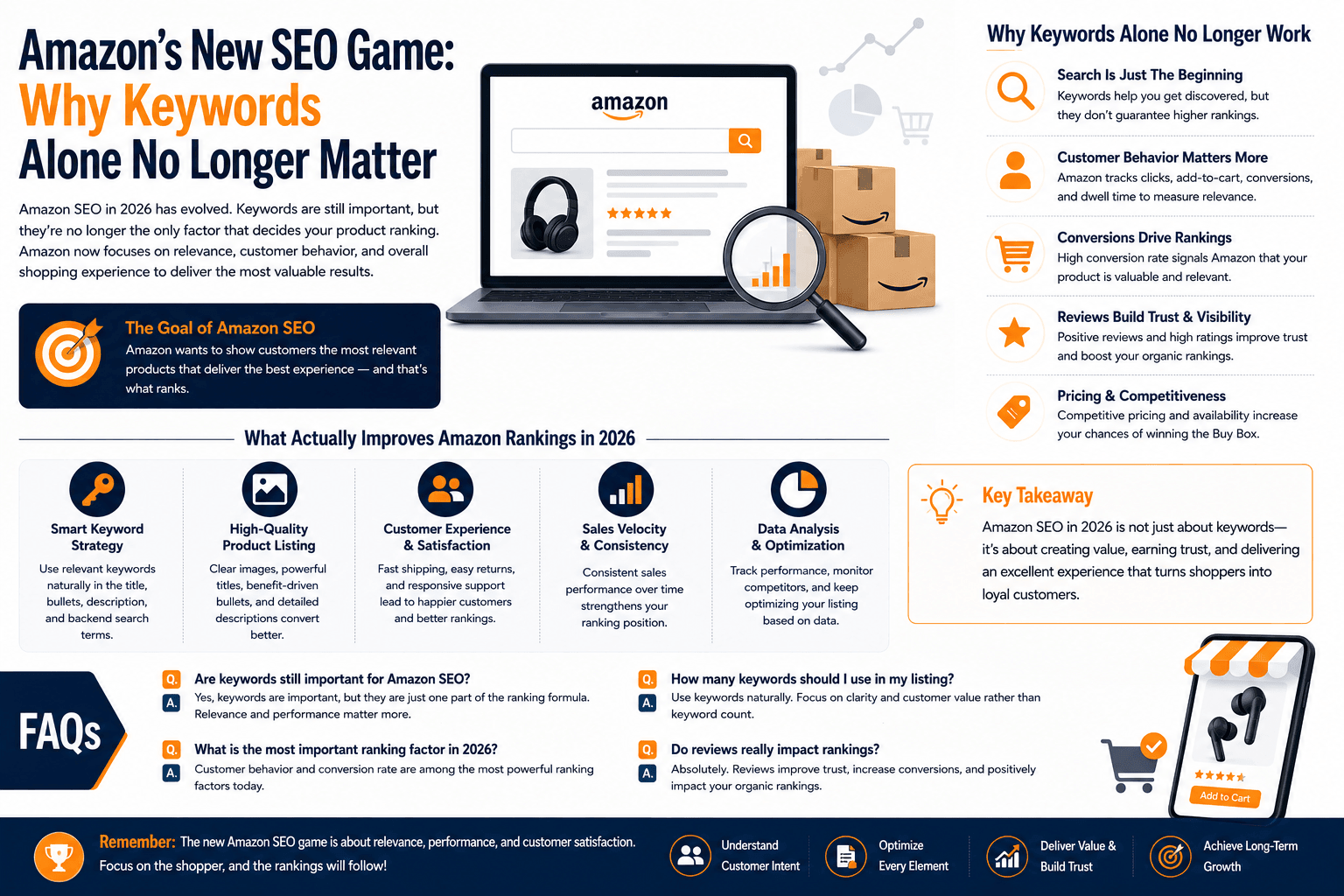
Yes. Keywords still connect shopper searches to your listing. They are not enough alone. Amazon SEO in 2026 also weighs how shoppers respond after they find you: clicks, engagement, conversion, reviews, pricing competitiveness, and overall listing quality.
For many years, sellers treated keywords as the whole ranking strategy: place the right terms in the title, bullets, description, and backend search terms, then expect search climb. That still helps Amazon understand what the product is. It does not guarantee durable rank if conversion and experience signals are weak.
Successful sellers balance keyword coverage with conversion rate, clear creative, competitive pricing, and a listing that answers shopper questions. Related reading: Amazon SEO ranking factors and Amazon listing optimization.
How Amazon SEO has evolved
Amazon's search systems aim to show products shoppers are likely to buy. Earlier ranking relied more heavily on keyword matching because the system leaned on the words customers typed.
Modern Amazon SEO also evaluates how customers respond after they discover a listing. Frequent clicks, time spent reviewing the page, and completed purchases support relevance and quality signals. Ranking for a keyword without converting those clicks is a weak long-term strategy.
The practical objective is a listing that earns the click and the purchase, not keyword placement alone. For algorithm context, see Amazon A10 algorithm 2026.
Why keywords still matter (but are not everything)
Some sellers hear "keywords are not enough" and stop keyword work. That is a mistake. Keywords remain the bridge between customer language and your catalog.
Effective keyword research shows how shoppers describe problems and products. Relevant terms in the title, bullets, description, and backend search terms help Amazon decide when your ASIN should appear.
Keyword stuffing still hurts. Repeating the same phrases unnaturally makes copy harder to read and can reduce trust. Use keywords with clear, persuasive content. Hands-on listing support: Amazon listing optimization services.
Listing optimization matters as much as keyword coverage
A strong Amazon listing combines SEO, branding, and conversion clarity.
Create a clear product title
Include primary keywords while stating brand, product type, and the main value or feature shoppers need to decide.
Write benefit-focused bullet points
Explain how the product solves problems. Features alone rarely convert as well as benefit-led bullets.
Use high-quality product images
Images are often the first signal shoppers process. Professional photos of angles, features, and use cases support engagement and conversion.
Improve the product description
A strong description answers common questions, builds confidence, and includes secondary keywords naturally.
Common Amazon SEO mistakes to avoid
- Stuffing listings with excessive keywords
- Using low-quality or unclear product images
- Ignoring customer reviews and complaints
- Writing generic product descriptions
- Skipping competitor listing and keyword review
- Focusing only on rankings instead of conversions
Avoiding these mistakes helps create a listing that serves both search systems and shoppers.
What to do next
Keywords remain necessary for Amazon SEO in 2026. Conversion, creative quality, pricing, and review health decide whether rank holds. Pair keyword research with listing and PPC systems that support profitable traffic.
Request a free Amazon audit from eCom Gliders, or continue with how to launch a new product with Amazon SEO and overlooked Amazon SEO factors.
About the author
Mary
Content Specialist
Mary writes practical Amazon seller guides covering PPC, SEO, listing optimization, and account management.
Keep reading