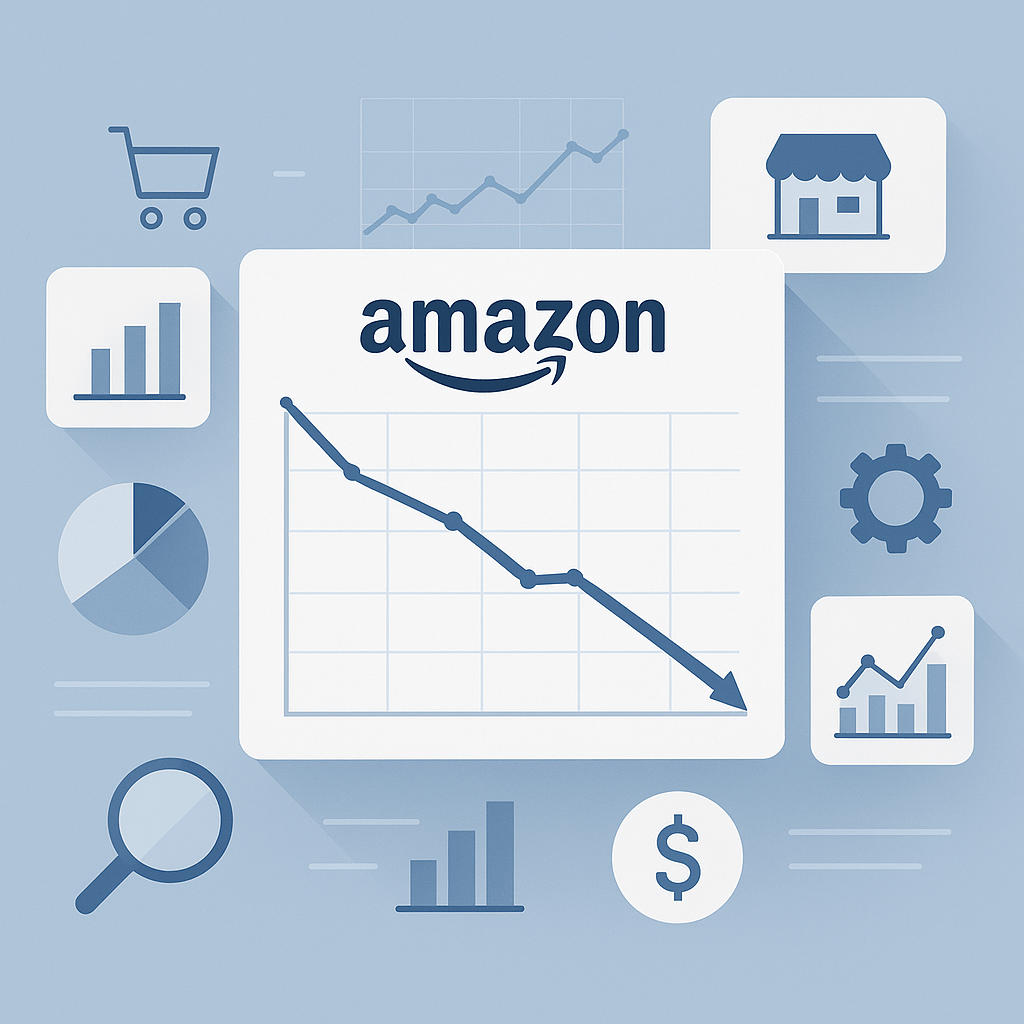
Has There Been a Decline in Amazon Sales?
Has There Been a Decline in Amazon Sales?
Introduction:
The question of whether Amazon sales have experienced a decline has become a significant topic within the global commerce industry. Investors, sellers, analysts, supply chain specialists, and digital economy observers have all been attempting to understand how the worlds largest online marketplace continues to evolve under economic pressure, competitive expansion, regulatory challenges, and consumer behavior shifts. The answer is multifaceted. There have been periods of slowdown in certain categories, changes in year over year trends, pressure from global inflation, and a recalibration of digital demand following the abrupt pandemic era surge. At the same time, Amazon remains one of the most resilient companies on the planet with strategically diversified revenue streams that include retail, logistics, advertising, and cloud services.
This extensive analysis explores the broader question in a structured and advanced manner by examining micro trends, macro trends, category behavior, geographic volatility, marketplace competition, cost structure evolution, consumer fatigue factors, advertising environment transformations, and long term indicators. The objective is to establish a clear professional understanding of whether Amazon has actually faced a meaningful decline in its sales performance or whether recent fluctuations represent natural adjustments within a highly mature global ecosystem.
Because this topic is complex, the following deep exploration builds a comprehensive picture across multiple dimensions that influence Amazons overall sales trajectory. The analysis avoids surface level observations and instead provides a thorough contextual framework that helps sellers and industry professionals understand what is truly happening behind the scenes.
Understanding What a Decline Means in the Context of Amazon?
The concept of a decline in Amazon sales requires careful interpretation. For most businesses, a decline typically refers to a sustained and measurable drop in total revenue. However Amazon operates across many different revenue lines, regional markets, product categories, and digital service layers. A shift in one area does not always reflect the companys complete performance. For example, Amazon retail sales may slow while advertising revenue climbs. Certain categories may temporarily shrink while others expand. Some regions may experience lower demand due to local economic pressures, while other regions experience accelerated growth.
Therefore before examining specific data, one must answer a foundational question. What exactly constitutes a decline for a company of Amazons scale and complexity. Analysts typically look at several indicators.
First, year over year retail sales growth across the entire platform. Second, gross merchandise value trends. Third, marketplace seller performance across diverse product categories. Fourth, consumer demand sustainability following unusual economic cycles such as the pandemic surge. Fifth, advertising revenue behavior, which is closely tied to sales because brands increase spending when demand is strong. Sixth, internal investments in logistics capacity, storage facilities, transportation assets, and automation which often correlate with Amazon expectations for future sales. Seventh, competitor performance across other digital commerce platforms which acts as an external benchmark.
A decline therefore is rarely a simplistic measure. It is instead a layered concept that needs a broad analytical lens. Amazon can experience a decline in one aspect of its business while still demonstrating growth in another. Understanding this nuance is essential before examining the complex economic and behavioral forces that have shaped recent performance.
Post Pandemic Normalization and the Recalibration of Consumer Demand:
One of the most influential forces behind perceptions of declining Amazon sales is the global shift that occurred after the pandemic era. During the period of international restrictions digital commerce saw a surge that exceeded normal projections by many years. Households that relied heavily on physical retail temporarily shifted their spending toward digital channels. As a result Amazon experienced unprecedented demand spikes across categories such as home improvement supplies, personal technology, household essentials, entertainment products, and remote work equipment.
When the world reopened, consumer behavior gradually rebalanced. Spending on travel, dining, in person entertainment, and physical retail rebounded while some of the digital commerce acceleration slowed. This did not necessarily represent a decline in Amazons long term performance. Instead it reflected a recalibration from an artificial high point. Even though Amazon continued to grow, the growth rate appeared slower relative to the inflated demand of the isolation period. In markets where temporary surges occur, any subsequent normalization may appear as a decline even if it is simply a return to sustainable baseline trends.
From a professional standpoint, this normalization was expected. Amazon and other digital commerce platforms saw intense growth during the pandemic era because demand was forcibly redirected. Once restrictions eased, consumer time and spending attention redistributed more evenly across offline and online channels. This created a temporary narrative that Amazon was declining, when in fact the company was moving from unusual acceleration back toward steady state growth.
Inflationary Pressures and Shifts in Household Spending Behavior:
Global inflation has played a significant role in influencing consumer demand across all retail sectors, including Amazon. When the cost of essentials rises, households often reduce discretionary spending. This reduction directly impacts numerous Amazon categories such as outdoor products, apparel, small electronics, health and beauty products, and home decor.
The inflation surge also created a unique psychological effect. Consumers became more cautious, often postponing purchases unless they were necessary or discounted. Some categories maintained resilience, such as personal essentials and low cost household goods, while others faced volatility. This trend created the appearance of declining Amazon sales across discretionary categories, although essential and need based areas of the catalog continued to perform consistently.
Additionally supply chain inflation caused sellers to raise their prices. Higher product costs combined with increased logistics expenses made consumers more sensitive to value. When product prices rise faster than income, overall unit sales may decline even if revenue remains stable. For Amazon analysts, the important distinction is that unit sales volume can decline while total revenue remains consistent or even increases due to higher average selling prices.
Inflation therefore does not necessarily reflect a decline in Amazons market strength. Instead it represents an external macroeconomic pressure that influences the entire global marketplace. Amazon is still one of the most efficient retailers in the world. However consumer behavior naturally shifts when household budgets tighten.
Explore our complete professional analysis on the topic above
Connect with our expert team for tailored guidance
Get In TouchCompetitive Expansion and the Rise of Alternative Commerce Platforms?
Although Amazon remains the largest online marketplace in the world, competition has increased significantly in recent years. Emerging online retail platforms, mobile focused commerce ecosystems, and global discount marketplaces have gained traction by offering attractive pricing, fast shipping programs, and aggressive promotional strategies.
These platforms include large established retailers that expanded their digital operations, as well as international competitors that specialize in low cost goods. The growing popularity of social commerce channels integrated within major social media platforms has also diversified consumer shopping behavior. Younger demographics especially tend to discover and buy products through mobile apps, social influencers, discovery algorithms, and community based content rather than through traditional search driven marketplaces.
This shift does not necessarily indicate a broad decline in Amazon sales. Instead it suggests that certain segments of the consumer base have adopted additional commerce habits. Amazon remains a destination for reliability, fast fulfillment, and trusted transactions. However discovery based and entertainment driven commerce experiences have introduced new competition especially for low cost lifestyle products.
To maintain long term leadership, Amazon has continued to expand its advertising ecosystem, refine its recommendation engine, and introduce advanced logistics programs. The competitive landscape simply means that sales growth is now distributed across more digital platforms than in previous years. Amazon has not lost its dominance, but the environment around it has become more dynamic and multifaceted.
The Evolving Cost Structure for Sellers and Its Impact on Product Pricing:
The cost environment for Amazon sellers has undergone a transformation. Expenses related to fulfillment services, warehouse storage, transportation, advertising, and returns processing have increased over time. These increased operational costs influence how sellers price their products and how consumers perceive value on the platform.
When cost structures rise, sellers often adjust prices upward. However this can reduce conversion rates for price sensitive consumers. In addition, higher advertising costs have become a significant factor because visibility on Amazon is often tied to pay per click campaigns. Many sellers report that advertising spend now represents one of their largest expenses. This influences the final price of products and can contribute to slower unit sales in competitive categories.
The shift in cost structure does not indicate a decline in Amazons overall sales system. Instead it reflects the maturity of the platform. As Amazon becomes more robust, with larger logistics networks and more complex operations, the cost of delivering consistent service increases. Sellers adapt by optimizing pricing strategies, improving product quality, enhancing branding efforts, and strategically balancing advertising budgets.
Understanding this environment is essential for interpreting fluctuations in sales trends. Some categories may appear to decline when in truth they are experiencing increased competition, rising operational costs, and evolving advertising dynamics.
Category Specific Performance and the Importance of Differentiated Behavior:
Amazon does not operate as a uniform marketplace. Different product categories behave in entirely different ways and are influenced by unique demand patterns. Therefore any attempt to determine whether Amazon sales have declined must examine individual category performances rather than assuming a universal trend.
Some categories that have experienced volatility include consumer electronics, apparel, fitness products, and certain luxury accessories. These areas often fluctuate based on economic conditions and seasonal trends. In contrast, categories such as health care essentials, personal care items, pet supplies, and consumables maintain stable performance even during economic slowdowns.
Home improvement categories saw remarkable surges during the pandemic period followed by a natural recalibration. Seasonal categories continue to perform strongly. Subscription based categories maintain steady growth. The performance therefore depends on product type, price segment, consumer sentiment, and external influences such as inflation or supply chain constraints.
It is inaccurate to describe Amazon sales as universally declining. Instead the correct interpretation is that category behavior varies significantly across the marketplace. Some areas expand while others contract. This is normal in a mature retail ecosystem.
40 percent
Growth in demand
70 percent
Active buyer rate
90 percent
Seller expansion
The Influence of International Markets and Regional Demand Variations:
Amazon operates across multiple geographic regions, each with its own economic conditions, cultural preferences, and market maturity. A decline in one region may be offset by growth in another. For example North American demand may soften slightly in discretionary categories, while demand in European or Asian markets may grow based on regional trends.
Global currency fluctuations also influence revenue reporting. When currency values shift relative to the dollar, Amazon reported numbers may appear lower despite stable sales volume in local regions. This can create the impression of a decline when the underlying consumer activity remains consistent.
Therefore any discussion about declining Amazon sales must account for these geographic and currency based dynamics. Amazon is not a single market entity. It is a global network with a diverse consumer base. Its performance cannot be accurately evaluated by focusing exclusively on one region.
Changes in Consumer Discovery Behavior and the Decline of Traditional Search Driven Shopping:
One of the most profound shifts affecting Amazon is the change in how consumers discover products. Historically many shoppers visited Amazon with a clear intent to purchase. They searched for specific items, compared listings, and completed transactions. However consumer behavior continues to evolve as digital environments expand.
A growing percentage of consumers now discover products through short form video platforms, lifestyle content, influencer recommendations, curated collections, mobile first social apps, and community based shopping groups. This change has reduced reliance on traditional search driven shopping flows. When discovery shifts outside the marketplace, the demand funnel that leads to Amazon becomes fragmented.
This does not necessarily reflect a decline in Amazon sales. Instead it represents a diversification of the digital economy. Amazon still serves as the final transaction destination in many cases, even when discovery occurs elsewhere. The key challenge for Amazon is adapting to a world where discovery is increasingly visual, personality driven, and socially integrated.
This trend influences sales patterns in certain categories more than others. For categories dependent on impulse discovery, such as lifestyle accessories, fashion, and trend driven products, social commerce channels may capture a larger share of early consumer attention. Amazon in turn continues to invest in advertising tools, influencer programs, livestream shopping, and integrated media to remain competitive in this evolving environment.
Amazon Advertising Expansion and Its Relationship to Sales Trends:
The growth of Amazons advertising ecosystem is a critical indicator of marketplace health. Advertising spend tends to increase when sellers experience strong demand because businesses invest more in campaigns when the return on investment justifies the cost. Conversely, if advertising growth slows, some analysts interpret this as a sign of softened consumer demand.
However the relationship between advertising spend and sales performance is more complex. Advertising costs may rise due to increased competition rather than declining sales. In addition, as the marketplace matures, more sellers rely on advertising as a required operational expense, similar to shelf space fees in physical retail.
Advertising also influences visibility. When advertising costs rise, some sellers reduce their campaigns which may slightly impact their sales. This can create the appearance of a decline among individual sellers even though the overall platform remains healthy. Understanding this dynamic is essential for interpreting trends correctly.
Amazon continues to expand its advertising platform with advanced analytics, new creative formats, better targeting, and improved automation. The strength of this ecosystem demonstrates that Amazon remains an attractive marketplace for brands, even during economic shifts.
Logistics Capacity and Its Impact on Marketplace Performance:
Amazon has invested billions into growing its fulfillment network, building more warehouses, increasing transportation capabilities, expanding delivery speed, and automating its operations. These investments serve as long term indicators of confidence in marketplace growth.
During periods when Amazon expands its logistics infrastructure, short term expenses may increase. This sometimes leads to temporary reductions in profitability. However increasing capacity generally signals that Amazon expects continued growth in consumer demand.
Periods of recalibration within logistics also influence sales. When Amazon temporarily rebalances warehouse capacity or adjusts storage fees, sellers adapt their inventory strategies. Some may reduce stock levels, causing short term dips in sales volume until they realign their logistics planning. These shifts do not reflect a structural decline.
Understanding Amazons logistics evolution is essential for interpreting sales trends accurately. The company continues to invest heavily in its infrastructure, a strong indication that long term demand remains robust.
Seller Saturation and Category Crowding:
Another factor contributing to perceived sales declines is the increase in marketplace competition. Amazon has millions of sellers worldwide. In highly saturated categories, competition has become intense and profit margins have narrowed. Many sellers report lower unit sales not because Amazon demand has declined, but because competitor count has risen significantly.
When dozens or hundreds of similar products compete for visibility, each seller may experience lower sales volume even while the marketplace as a whole experiences stable or increased demand. It is therefore inaccurate to interpret individual seller declines as a sign of platform wide decline.
Advanced sellers are responding to this saturation by improving branding, enhancing product quality, investing in creative packaging, optimizing listing content, building external traffic channels, and developing multiproduct portfolios. Marketplace saturation reflects the maturity of Amazon rather than a deterioration of its overall sales health.
Conclusion:
After analyzing category trends, macroeconomic pressures, consumer behavior shifts, marketplace competition, cost structure evolution, logistics capacity changes, and long term strategic indicators, the conclusion is clear.
There have been periods of slowdown and recalibration in certain categories and regions. This is normal for a mature global marketplace. However there is no evidence of a structural decline that threatens Amazons long term growth. Instead the platform continues to evolve, diversify, and strengthen its ecosystem. Fluctuations in category performance reflect broader economic cycles rather than a fundamental weakening of Amazons position.
Amazon remains one of the most powerful commerce platforms in the world. Its sales performance continues to be influenced by external economic factors, changing consumer expectations, and competitive dynamics. Nevertheless all long term indicators point toward ongoing stability and future growth.
Is Amazon experiencing an overall decline in its retail business?
Why do some Amazon sellers report lower sales if the platform is not declining?
What factors will influence Amazons future sales performance?
-
Mary
- November 28, 2025
- 2:37 pm
- Reading time 5 min
Recent Posts
- All Post
- Amazon Compliance
- Amazon FBA Guide
- amazon market analysis
- Amazon PPC
- Amazon Stock
- Amazon Tools
- Business Strategy
- Ecommerce News & Analysis
- Full Account Management Services
- Guide
- Guide 2025
- News
- News 2026
- PPC Services
- Prime day
- Stories
- Team Memebers
- Technology and Digital Services
- Top Agencies
- Top PPC tools
- Why we are Unique?


Get a Quick Solution
Need help fast? Our expert team is here to provide you with efficient and reliable solutions tailored to your needs. Don’t wait—reach out today!
Categories
- Amazon Compliance (5)
- Amazon FBA Guide (6)
- amazon market analysis (2)
- Amazon PPC (30)
- Amazon Stock (1)
- Amazon Tools (17)
- Business Strategy (12)
- Ecommerce News & Analysis (6)
- Full Account Management Services (106)
- Guide 2025 (20)
- News 2026 (16)
- PPC Services (58)
- Prime day (2)
- Technology and Digital Services (1)
- Top PPC tools (1)
- Why we are Unique? (11)
Subscribe for Growth Tips, Seller Hacks & eCom Wins