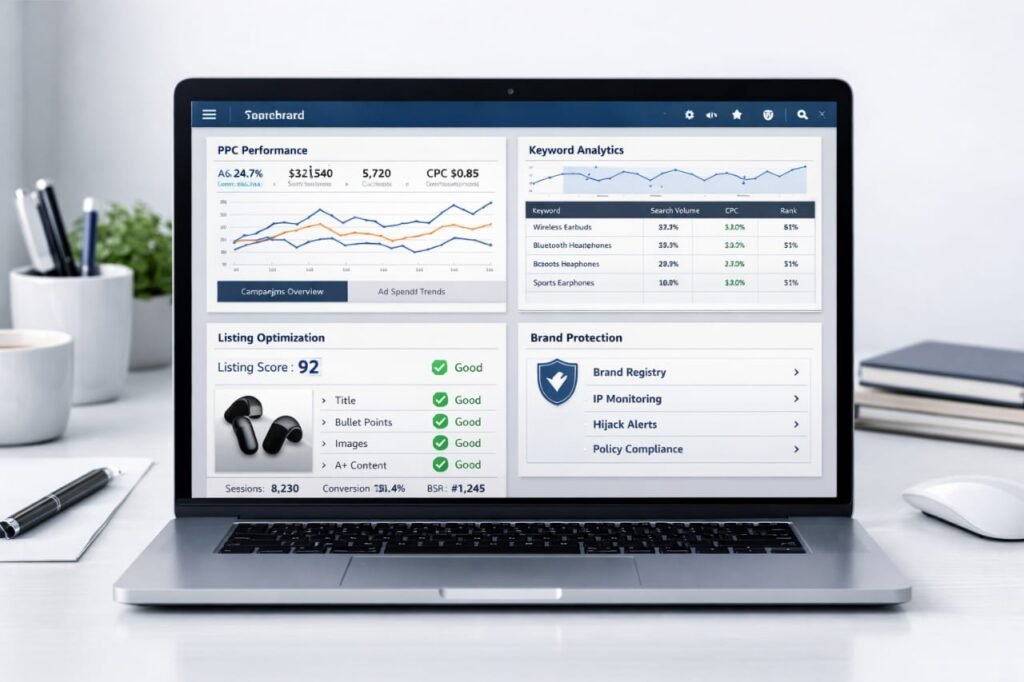
From Decision to Dominance Designing Scalable Amazon Business Systems
From Decision to Dominance Designing Scalable Amazon Business Systems
Introduction:
Success on Amazon is not the result of isolated tactics or temporary growth hacks. It is the outcome of deliberate decisions translated into structured systems that compound over time. Many sellers enter the Amazon ecosystem driven by opportunity but remain stuck due to operational chaos, reactive strategies and lack of scalable foundations. Moving from a simple decision to sell on Amazon toward market dominance requires a system driven approach that aligns brand vision, operational discipline, data intelligence and customer centric execution.
A scalable Amazon business system is not built by chance. It is engineered through intentional planning, cross functional alignment and continuous optimization. In an environment where competition intensifies daily and platform dynamics evolve rapidly, sellers who rely on fragmented actions eventually plateau. Those who design systems that scale gain predictability, resilience and long term authority within their category.
This article explores how Amazon businesses can evolve from a single decision into sustained dominance by building scalable systems across strategy, operations, marketing, data and leadership. The focus is not on surface level tactics but on advanced frameworks that support durable growth.
Understanding the Shift From Selling to System Building:
The Difference Between Operators and Architects:
Most Amazon sellers operate as task executors. They respond to issues, launch products reactively and chase short term revenue. System builders act as architects. They design processes that function independently of constant intervention. This shift in mindset is the foundation of scalability.
Operators ask what needs to be done today. Architects ask how the system should function tomorrow. Amazon dominance belongs to those who think in systems rather than isolated actions.
Why Scaling Without Systems Leads to Failure:
Rapid revenue growth without infrastructure creates hidden risk. Inventory misalignment, advertising inefficiencies, customer dissatisfaction and cash flow strain are common consequences. Scalability demands consistency, predictability and control. Systems provide these qualities by reducing dependency on individual effort and increasing organizational leverage.
Strategic Foundation Designing the Blueprint for Scale:
Defining the Long Range Amazon Vision:
Scalable businesses begin with clarity. Sellers must define what dominance means for their brand. Is it category leadership, multi marketplace expansion, brand equity or acquisition readiness. Without a defined destination, systems lack direction.
A long range Amazon vision informs decisions across product development, branding, pricing and operations. It prevents tactical drift and ensures alignment across teams and partners.
Category Intelligence and Market Structure Analysis:
Advanced sellers analyze category economics before scaling. This includes demand elasticity, price compression trends, private label saturation and brand loyalty signals. Understanding the structural dynamics of the category allows sellers to design systems that exploit opportunity while mitigating risk.
Category intelligence systems include competitor tracking, pricing trend analysis and review sentiment monitoring. These systems transform market awareness into strategic advantage.
Ready to move from decision to dominance on Amazon
Explore how scalable systems can transform your Amazon business into a market leader
Get Your Free Amazon Growth AuditProduct System Engineering for Sustainable Expansion:
Product Portfolio Architecture:
Scalable Amazon brands do not rely on isolated products. They design portfolios with complementary demand patterns, shared audiences and cross sell potential. A structured portfolio reduces revenue volatility and improves lifetime customer value.
Product systems include standardized launch frameworks, lifecycle management protocols and exit criteria for underperforming items.
Supply Chain Resilience and Forecasting Systems:
Inventory instability is one of the largest barriers to scale. Advanced Amazon systems use data driven forecasting models that integrate seasonality, advertising velocity and historical demand trends.
Resilient supply chains include diversified suppliers, safety stock logic and lead time optimization. These systems protect growth momentum during periods of volatility.
Operational Excellence Systems That Support Scale:
Process Standardization and Documentation:
Scalable operations require repeatable processes. Every critical function should be documented and standardized. This includes listing creation, inventory planning, advertising management and customer service workflows.
Documentation reduces errors, accelerates onboarding and ensures consistency across expansion phases.
Delegation and Role Based Ownership:
Growth stalls when founders remain bottlenecks. Scalable Amazon systems assign clear ownership to defined roles. Responsibility is distributed without sacrificing accountability.
Role based systems enable teams to operate autonomously while aligning with strategic objectives.
Advanced Amazon Advertising Systems:
Advertising as a Demand Engine Not an Expense:
At scale, Amazon advertising is not a tactical tool but a demand engine. Advanced sellers design advertising systems that balance profitability, ranking influence and data acquisition.
Advertising structures include campaign segmentation by intent, lifecycle stage and profitability thresholds.
Automation and Bid Intelligence:
Manual optimization limits scalability. Advanced systems integrate automation layers that adjust bids based on performance signals and margin targets. Automation frees strategic capacity while maintaining control.
Bid intelligence systems analyze conversion trends, competitive pressure and keyword saturation to inform decisions.
Pros and Cons of Building Scalable Amazon Business Systems
A balanced view to help sellers move from strategic decisions to long term dominance
| Pros | Cons |
|---|---|
|
Creates predictable growth by replacing reactive actions with structured systems Improves operational efficiency and reduces dependency on founder involvement Enhances brand authority and long term competitiveness in crowded Amazon categories Supports sustainable scaling across products marketplaces and teams |
Requires upfront investment of time resources and strategic planning Slower initial execution compared to quick tactical selling approaches Demands advanced data analysis and disciplined performance tracking Poor system design can limit flexibility if not regularly optimized |
Data Intelligence and Performance Measurement Systems:
Building a Single Source of Truth:
Scalable Amazon businesses rely on centralized data systems. Fragmented reporting leads to misaligned decisions. A single source of truth integrates sales, advertising, inventory and financial data into actionable dashboards.
This enables leadership to make decisions based on real time insights rather than assumptions.
Key Performance Indicators That Matter at Scale:
Advanced sellers move beyond vanity metrics. They track contribution margin, customer acquisition cost, lifetime value and inventory turnover. These indicators guide sustainable scaling rather than short term revenue spikes.
Brand Equity Systems Beyond the Buy Box:
Brand Positioning and Perception Control:
Dominance on Amazon requires more than price competitiveness. Strong brands command trust, loyalty and premium positioning. Brand systems include consistent messaging, visual identity governance and value proposition clarity.
Perception control systems monitor reviews, customer feedback and brand sentiment to protect equity.
Customer Experience and Retention Systems:
Repeat customers are a scalability multiplier. Systems that enhance customer experience include proactive service protocols, post purchase engagement and product education.
Retention driven systems reduce dependency on constant acquisition and stabilize revenue.
Leadership and Decision Systems for Long Term Dominance:
Decision Making Frameworks:
At scale, decisions must be consistent and aligned. Advanced sellers implement decision frameworks that evaluate tradeoffs between growth, profitability and brand integrity.
Structured decision systems reduce emotional bias and ensure rational execution under pressure.
Building a Culture of Continuous Optimization:
Amazon dominance is not static. Systems must evolve with platform changes and market dynamics. Leadership systems encourage experimentation, feedback loops and data driven refinement.
A culture of continuous optimization ensures long term relevance and resilience.

Scaling Across Marketplaces and Channels:
Geographic Expansion Systems:
Global expansion requires localization systems that adapt pricing, compliance and marketing to regional contexts. Successful sellers design expansion playbooks that reduce friction and risk.
Omnichannel Integration Without Dilution:
Scalable brands integrate Amazon within a broader ecosystem. Systems align messaging, pricing and inventory across channels while preserving Amazon performance.
This prevents channel conflict and strengthens brand authority.
Conclusion:
The journey from decision to dominance on Amazon is not linear. It is a transformation from reactive selling into intentional system design. Scalable Amazon businesses are built on structured foundations that align strategy, operations, data, branding and leadership.
Those who dominate are not those who work harder but those who design smarter. They replace chaos with clarity, effort with leverage and growth with sustainability. In an increasingly competitive marketplace, systems are not optional. They are the difference between temporary success and lasting authority.
Designing scalable Amazon business systems is the ultimate competitive advantage. It turns ambition into execution and execution into dominance.
How long does it take to build a scalable Amazon system?
Can small Amazon sellers implement these systems?
What is the biggest mistake sellers make when scaling?
-
Mary
- December 22, 2025
- 5:42 pm
- Reading time 5 min
Recent Posts
- All Post
- Amazon Compliance
- Amazon FBA Guide
- amazon market analysis
- Amazon PPC
- Amazon Stock
- Amazon Tools
- Business Strategy
- Ecommerce News & Analysis
- Full Account Management Services
- Guide
- Guide 2025
- News
- News 2026
- PPC Services
- Prime day
- Stories
- Team Memebers
- Technology and Digital Services
- Top Agencies
- Top PPC tools
- Why we are Unique?


Get a Quick Solution
Need help fast? Our expert team is here to provide you with efficient and reliable solutions tailored to your needs. Don’t wait—reach out today!
Categories
- Amazon Compliance (5)
- Amazon FBA Guide (6)
- amazon market analysis (2)
- Amazon PPC (30)
- Amazon Stock (1)
- Amazon Tools (17)
- Business Strategy (12)
- Ecommerce News & Analysis (6)
- Full Account Management Services (106)
- Guide 2025 (20)
- News 2026 (16)
- PPC Services (58)
- Prime day (2)
- Technology and Digital Services (1)
- Top PPC tools (1)
- Why we are Unique? (11)
Subscribe for Growth Tips, Seller Hacks & eCom Wins