From Features to Frameworks The New Amazon Tools Architecture for 2026
Introduction:
Amazon selling in 2026 is no longer defined by isolated tools or single feature advantages. The marketplace has evolved into a highly competitive ecosystem where success depends on how well sellers design and integrate complete operational frameworks. Tools alone no longer provide leverage unless they are embedded within a structured system that governs decision making execution and optimization. This shift from feature focused usage to framework driven architecture is redefining how modern Amazon businesses are built scaled and sustained.
As automation artificial intelligence and predictive analytics mature Amazon tools are transforming from reactive utilities into proactive systems. Sellers who understand this transition and adapt their operational architecture accordingly will gain durable competitive advantages. Those who continue to rely on fragmented tools without system level alignment will struggle with volatility inefficiency and declining margins.
The Limitations of Feature Based Amazon Tools:
Historically Amazon sellers evaluated tools based on individual capabilities such as keyword discovery profit calculation listing optimization or review tracking. While these features delivered value in earlier stages of marketplace maturity they now suffer from diminishing returns due to saturation and commoditization.
Feature centric tool usage creates several structural weaknesses:
- Decisions become siloed across departments
- Data insights lack contextual alignment
- Optimization efforts conflict rather than compound
- Growth depends on constant manual intervention
In 2026 Amazon is too complex too fast and too data dense for disconnected tools to drive meaningful outcomes. Sellers need architectures that unify insights actions and feedback loops across the entire business.
The Rise of Framework Driven Amazon Tool Architecture:
Framework driven architecture represents a fundamental shift in how Amazon tools are selected configured and deployed. Instead of asking what a tool can do sellers now ask how a tool fits into a larger operational logic.
A framework defines the rules sequencing and dependencies that govern execution. Tools then serve as enablers within that framework rather than drivers of strategy.
Key characteristics of framework driven architecture include:
- Centralized data intelligence layers
- Predictive rather than reactive decision models
- Cross functional workflow integration
- Automated prioritization of actions
- Continuous performance feedback loops
This approach transforms Amazon operations from tactical execution into strategic system management.
Core Layers of the 2026 Amazon Tools Framework:
Modern Amazon tool architecture is best understood as a layered system where each layer supports and informs the next.
Intelligence Layer:
This layer aggregates data from Amazon Seller Central advertising platforms inventory systems and external market signals. Its purpose is not reporting but interpretation. Advanced tools in this layer use machine learning to identify trends risks and opportunities before they surface in performance metrics.
Decision Layer:
Here raw intelligence is translated into prioritized actions. Instead of manual analysis sellers rely on rule based and probabilistic models that determine where attention and resources should be allocated.
Examples include budget reallocation logic pricing adjustment thresholds and inventory forecasting triggers.
Execution Layer:
This layer operationalizes decisions through automation. Listing updates advertising bid changes replenishment orders and testing protocols are executed consistently and at scale without manual friction.
Optimization Layer:
Performance outcomes feed back into the system refining both intelligence models and decision rules. Over time the framework becomes smarter more adaptive and more aligned with business objectives.
How Amazon Tools Are Evolving to Support Frameworks?
Tool developers are responding to this architectural shift by redesigning their platforms around interoperability and system thinking.
Key advancements shaping Amazon tools in 2026 include:
- Modular design allowing tools to plug into broader systems
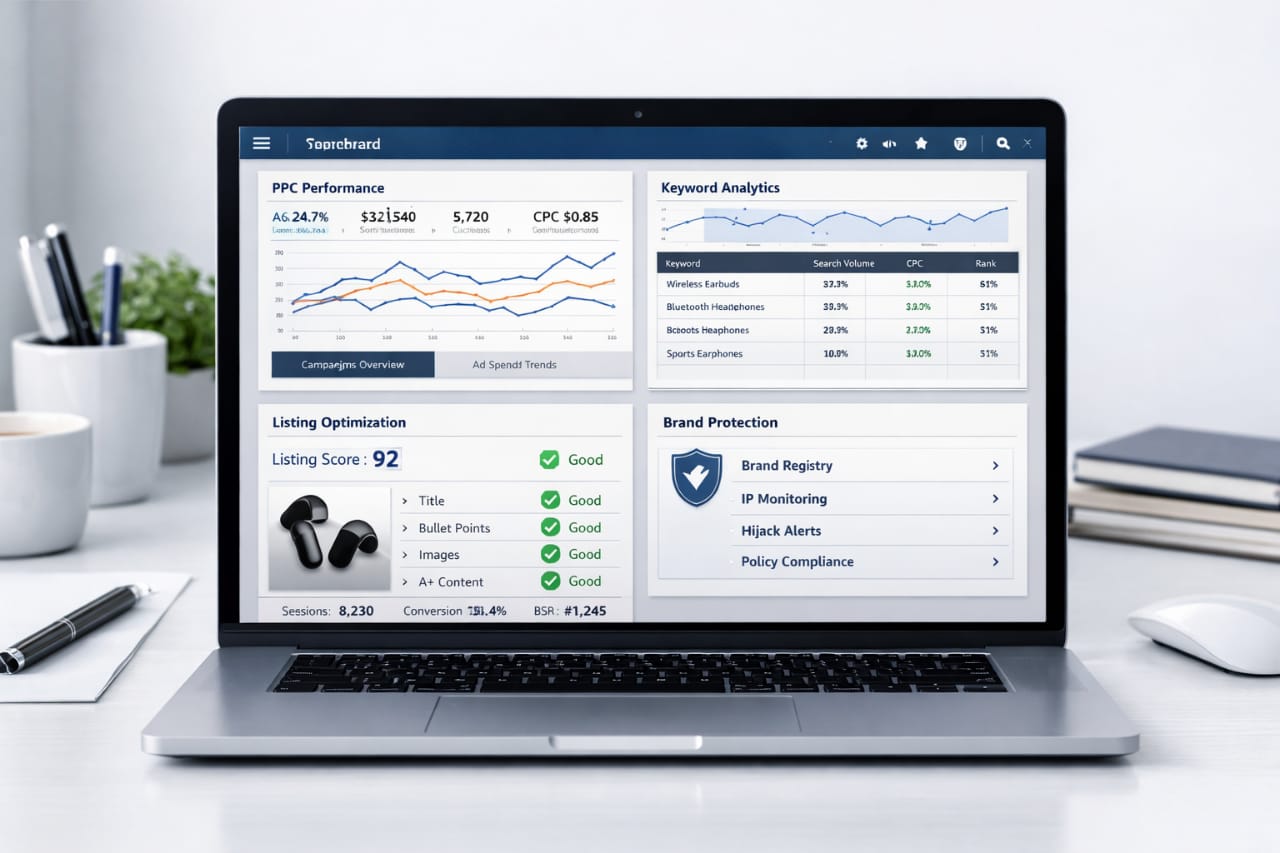
- Unified dashboards that reflect business outcomes rather than metrics
- Scenario modeling for strategic planning
- AI driven recommendations grounded in historical patterns
- Workflow automation across multiple Amazon functions
The most valuable tools are no longer those with the most features but those that integrate seamlessly into a sellers operational framework.
What is the biggest difference between feature based and framework based Amazon tools?
Are framework driven Amazon tools only for large sellers?
How long does it take to transition to a framework approach?
Looking to apply proven Amazon growth strategies to your brand
Connect with our team to turn strategy into measurable sales growth
Get in Touch-
Mary
- December 31, 2025
- 5:18 pm
- Reading time 5 min
Recent Posts
- All Post
- Amazon Compliance
- Amazon FBA Guide
- amazon market analysis
- Amazon PPC
- Amazon Stock
- Amazon Tools
- Business Strategy
- Ecommerce News & Analysis
- Full Account Management Services
- Guide
- Guide 2025
- News
- News 2026
- PPC Services
- Prime day
- Stories
- Team Memebers
- Technology and Digital Services
- Top Agencies
- Top PPC tools

Get a Quick Solution
Need help fast? Our expert team is here to provide you with efficient and reliable solutions tailored to your needs. Don’t wait—reach out today!
Categories
- Amazon Compliance (5)
- Amazon FBA Guide (6)
- amazon market analysis (2)
- Amazon PPC (30)
- Amazon Stock (1)
- Amazon Tools (5)
- Business Strategy (12)
- Ecommerce News & Analysis (6)
- Full Account Management Services (58)
- Guide 2025 (20)
- News 2026 (16)
- PPC Services (58)
- Prime day (2)
- Technology and Digital Services (1)
- Top PPC tools (1)
Subscribe for Growth Tips, Seller Hacks & eCom Wins