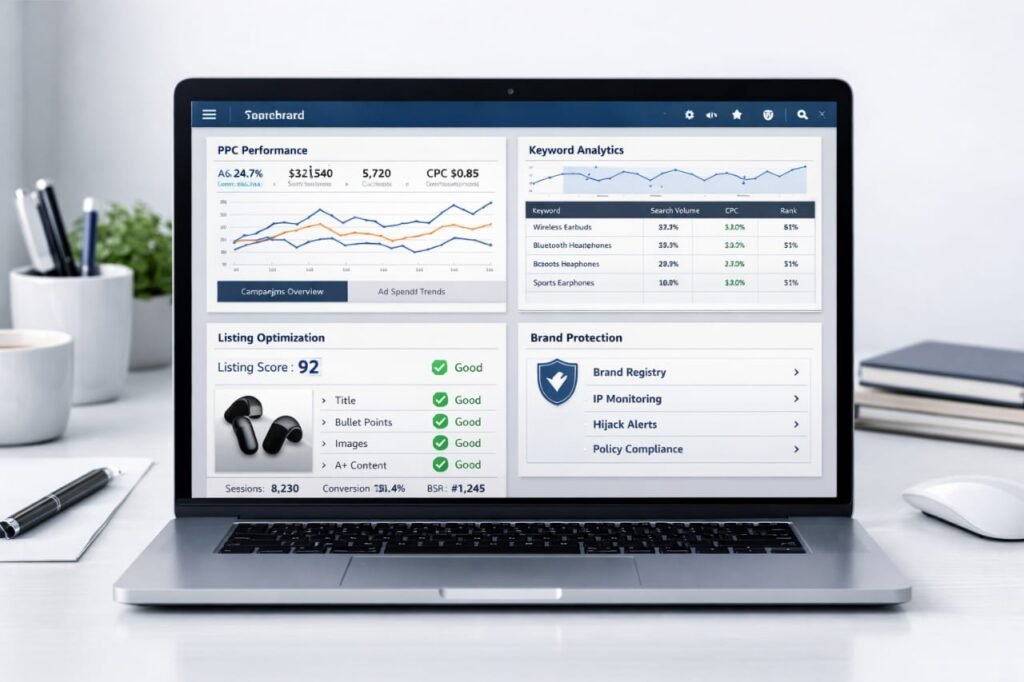
How many Amazon sellers make over $100k?
How many Amazon sellers make over $100k?
Introduction:
The marketplace of Amazon has evolved into one of the most significant e-commerce ecosystems in the world. With millions of third-party sellers operating across multiple regions, one question frequently arises: How many of these sellers actually cross the six-figure income threshold (i.e., over US$100,000 annually)? Understanding this benchmark is important for prospective sellers, investors, and marketplace strategists alike. In this article, we will delve into the data around Amazon seller revenues, explore factors that drive high-earning performance, examine what it takes to exceed US$100k, and contrast the many sellers who operate below this level. We’ll also provide strategic insights for how to move toward or beyond that threshold.
Understanding the Marketplace Landscape:
Before focusing specifically on the six-figure threshold, it’s critical to contextualise the size, structure, and revenue dynamics of Amazon’s seller ecosystem.
Seller counts & active participation:
Recent analyses estimate that Amazon has approximately 9.7 million sellers worldwide, with about 1.9 million actively selling at a given time.Within this vast base, only a fraction engage in high-volume or high-revenue activities.
Third-party (3P) sellers—meaning independent businesses selling via Amazon’s marketplace rather than Amazon first-party vendor arrangements—account for the majority of item units sold.
Revenue distribution dynamics:
The revenue distribution among Amazon sellers is highly skewed: many sellers have modest monthly or annual turnover, while a smaller subset achieve very high revenues.
For example:
According to one source, 42 % of sellers generate under US$1,000 per month in sales; on the opposite end, very few reach six-figure monthly sales.
Another survey by Jungle Scout found that for SMB (small and medium sized) Amazon sellers:
- 47 % had lifetime sales under US$25,000
- 10 % had lifetime sales US$25,001-50,000
- 6 % had lifetime sales US$50,001-100,000
- 10 % had lifetime sales between US$100,001-500,000
Thus, while the entry cost may be moderate, scaling to six-figures and beyond in annual sales remains non-trivial.
With that background, we now turn to the key question: how many sellers make over US$100k annually — and what that actually means in practice.
How Many Amazon Sellers Make Over US$100,000 Annually?
This section explores available data on how many Amazon sellers cross the US$100k mark — both in terms of sales revenue and (if available) net income/profit. Because most publicly available data focus on sales rather than profit, we emphasise caution in interpretation: sales ≠ take-home profit.
Sales thresholds and six-figure markers:
- According to a summary by GETIDA, as of 2021 about 350,000 Amazon sellers worldwide had lifetime sales over US$100,000.
- The same report stated 210,000 sellers had lifetime sales over US$250,000; 125,000 over US$500,000; 85,000 over US$750,000. (These are cumulative, not strictly “annual”.)
- Another source (ForceGet) claims that about 25 % of sellers make over US$100,000 annually, and 13 % earn over US$250,000.
- From the LitCommerce 2025 guide: “Independent Amazon sellers in the U.S. averaged over US$290,000 in annual sales in 2024” and “more than 55,000 sellers surpassed US$1 million in sales last year alone”.
Discover the real revenue potential of Amazon sellers and learn what it takes to cross the $100K milestone.
Explore strategies, insights, and proven growth methods to scale your Amazon business to six-figure success.
Interpreting the six-figure data:
It’s important to unpack definitions:
- “Over US$100k” could mean annual sales or profit. Most data refer to sales (gross revenue) rather than net profit.
- Some statistics refer to lifetime sales (i.e., cumulative since inception) rather than within one year. The former may inflate the apparent proportion of sellers who “make” six figures.
- Some data are region-specific (e.g., U.S.), while others are global. The U.S. marketplace tends to have more high-volume sellers given its size and maturity.
Reaching US$100k in sales is far easier than achieving US$100k in profit. Many sellers may generate six-figure sales but have lower margins or reinvest heavily.
Estimating a range:
Given the above, one reasonable interpretation is: roughly one-quarter of Amazon sellers may cross the US$100k annual sales threshold, but the proportion that achieve US$100k in net income is far lower — likely in the single- or low-double-digit percentage range.
For example:
If ~25 % of sellers make over US$100k in annual sales (as the ForceGet report suggests) and assuming there are ~1.9 million active sellers in the U.S./globally figure, that suggests ~475,000 sellers crossing that threshold. But given many sellers operate at low scale or are just starting, the number of sellers with stable six-figure income is smaller.
Additionally, the GETIDA data show lifetime sales over US$100k for ~350,000 sellers, which may translate to fewer certainly making US$100k per year. Thus, the conservative conclusion: hundreds of thousands of Amazon sellers globally are making over US$100,000 in annual sales, but tens of thousands or fewer are reliably making over US$100k in annual profit.
What Drives Sellers Across the US$100k Mark?
To understand how sellers reach the US$100k+ threshold—and stay there—we need to explore the key factors that differentiate high-earning sellers from the many who don’t.
Business model & product strategy:
- Private label vs. resale/retail arbitrage: Sellers who launch their own private-label products tend to scale more aggressively because they control branding, sourcing and margin. Many high-earning sellers adopt private label models.
- Niche selection and product fit: High-earning sellers typically identify market niches with moderate competition, strong demand and manageable logistics.
- Diversified portfolios: Sellers surpassing US$100k often hold multiple SKUs (product listings) rather than relying on a single product. This spreads risk and enables scale.
Fulfillment method: Many high-earning sellers use Fulfillment by Amazon (FBA) rather than merchant-fulfilled because FBA allows for Prime eligibility, consistent shipping, and a better customer experience which drives more sales. For example, one data set indicates 82 % of sellers use FBA.
Operational excellence:
- Efficient inventory management: High-earning sellers monitor their inventory turnover, avoid stock-outs (which cost sales) and optimise storage/fulfilment costs.
- Effective advertising & listing optimisation: Achieving six-figure revenues often requires substantial investment in Amazon PPC, listing A+ content, reviews, and conversion optimisation.
- Data-driven decision-making: Sellers crossing US$100k and beyond tend to systematically use data (sales trends, conversion rates, return rates, advertising ROI) to refine their product mix and marketing.
Scale and reinvestment: High-earners re-invest profits into new SKUs, better packaging, international markets, and promotions—thus compounding growth.
| Metric | Estimate / Data Point | Notes |
|---|---|---|
| % of sellers making > US$100k annually (sales) | ~25 % | Surveyed sellers; not necessarily global full sample. |
| Lifetime sellers with > US$100k in sales | ~350,000 | Worldwide cumulative number, not annual. |
| Average annual sales for U.S. independent sellers | ~US$290,000 | Applies to independent sellers in U.S. (not all). |
| % of sellers earning < US$1,000/month in sales | ~42 % | Shows many sellers operate at low volume. |
Market maturity and geography:
- Sellers based in mature marketplaces (such as the U.S. or U.K.) have larger addressable markets, more customers, and more infrastructure. Reports show independent U.S. sellers averaged ~US$290k in annual sales.
- Sellers who expand internationally (to other Amazon marketplaces) benefit from cross-border demand. One statistic indicates 46 % of U.S.-based Amazon merchants also operate internationally.
Time in business and growth trajectory:
- Achieving US$100k annual sales is rarely immediate. Many sellers start with modest sales (e.g., under US$1k/month) and grow over 1–3+ years. For instance, 64 % of sellers using FBA report becoming profitable within 12 months.
- The compounding effect of past sales, brand equity, reviews, and repeat customers tends to accelerate growth for sellers who survive the early phase.
- Market dynamics: Over time, experienced sellers build logistics, sourcing, and operational muscle that newbies may lack
Profit margin considerations:
- While sales are important, profit margins determine real take-home income. According to LitCommerce, 59 % of Amazon sellers have profit margins above 10 %, and 28 % have margins above 20 %.
- Sellers aiming to exceed US$100k net income must manage cost of goods sold (COGS), Amazon fees (referral & FBA), advertising spend, returns and overheads carefully.
Therefore, a seller achieving US$100k in annual sales with a 10 % margin takes home US$10k—not six figures. So realistically, to net US$100k, a seller might need US$500k+ in sales (depending on margin).
Get a complete breakdown of your Amazon store performance with expert insights tailored to your business.
Identify hidden opportunities, boost revenue, and discover what’s holding your store back from scaling higher.
Get Your Free Amazon Store AuditChallenges & Barriers to Reaching US$100k:
While the opportunity is real, there are several common obstacles that prevent many sellers from reaching or sustaining six-figure revenues.
Saturation and competition:
- As Amazon attracts more sellers, competition for many niches increases. New sellers often face entrenched incumbents, increasing advertising cost and lowering margins.
- According to marketplace data, even though ~9.7 million sellers exist worldwide, tens of thousands dominate large portions of the sales.
Capital & cash flow constraints:
- Scaling inventory to support high-volume sales requires upfront capital. Some sellers struggle with cash flow, over-ordering, or stock-outs.
- Advertising and marketing costs rise as you scale, so maintaining profitability while pushing for more revenue becomes challenging.
Operational risk & complexity:
- High volume sells means more returns, customer service issues, stranded inventory, FBA storage fees—all of which can eat margin.
- International expansion adds complexity: longer lead times, currency risk, local taxes, compliance.
- Changes in Amazon policies, algorithmic shifts, advertising cost inflation, or supply-chain disruptions can adversely impact sellers.
Product lifecycle and differentiation:
- Products with short lifecycle or intense seasonal demand may struggle to maintain consistent six-figure revenue annually.
- Relying on a single best-selling SKU is risky if competition arises or the listing is suppressed, revenue can drop quickly.
Profit vs revenue misalignment:
- Sellers may see US$100k+ in sales but still operate at low profit—or even loss—if margins are thin, returns are high, or advertising spend is excessive.
The headline “making over US$100k” might refer to gross revenue rather than net income, which can mislead.
Strategic Roadmap:
How to Position for US$100k+ Annual Sales:
For sellers targeting the six-figure mark, here’s a roadmap of strategic actions based on industry best practices and data-driven insight.
Phase 1: Foundation (Months 0-12):
- Conduct rigorous product research: validate demand, competition, margin, lead time, logistics.
- Start with one or two SKUs to test the market; target products with > 8–10 % profit margin potential.
- Opt for FBA to leverage Amazon’s logistics and Prime badge.
- Build optimized listings (SEO, enhanced brand content if applicable), obtain initial reviews (via compliant methods), and launch modest PPC campaigns.
Phase 2: Scaling (Months 12-24):
- Once initial SKUs are validated and profitable, introduce additional SKUs (2-5) to diversify risk.
- Re-invest profits into inventory, advertising expansion, and potentially international marketplaces.
- Monitor unit economics: cost of goods, FBA/storage fees, returns, advertising ACoS (advertising cost of sale).
- Optimize logistics: avoid storage fees, accelerate turnover, manage stranded inventory.
- Leverage data analytics to refine product mix, advertising strategy, and listing conversion.
Phase 3: Consolidation & Growth (> 24 months):
- Move into advanced strategies: bundling, subscriptions, brand building, private label differentiation.
- Expand to multiple marketplaces (e.g., UK, Germany, Canada, Japan) if feasible.
- Consider outsourcing non-core operations (fulfilment oversight, customer service, advertising optimisation) to free your time for strategy and product development.
- Monitor profitability closely: aim for net profit margin > 20 % to make high revenue count meaningfully.
- Build defensible brand assets: trademark, branded packaging, repeat-customer base.
Key Metrics to Track:
- Monthly sales growth rate
- SKU-level margin, returns rate
- ACoS (advertising cost of sale) and TACoS (total advertising cost of sale)
- Inventory turnover and storage fee burden
- Listing conversion rate (sessions → units)
- Customer acquisition cost and repeat purchase rate
Profit margin and EBITDA (earnings before interest, tax, depreciation, amortisation)

Regional & Marketplace Considerations:
Not all Amazon marketplaces are equal in terms of size, maturity, competition and buyer behaviour. Sellers aiming for US$100k+ annual sales should consider which marketplaces and regions maximise their opportunity.
Mature marketplaces (U.S., UK, Germany):
- U.S. remains the largest opportunity: largest consumer base, highest sales volume, infrastructure well-developed.
- Richer data and seller tools exist for these geographies, making it somewhat easier to scale.
- However, competition is intense, so differentiation and scale operational efficiency matter for success.
Emerging/International marketplaces:
- Marketplaces like India, Mexico, Brazil, Australia present growth opportunities but may have lower average buyer spend, fewer high-volume sellers, more operational complexity.
- Sellers can achieve early success by entering less crowded niches, but scaling to US$100k+ may require focusing on global expansion or exporting across multiple marketplaces.
Multi-market strategy:
- Diversifying across multiple marketplaces can help mitigate risk (one marketplace policy changes) and exploit regional demand differences.
- Currency, shipping, taxes, returns logistics become more complex—so build infrastructure and expertise accordingly.
Reflecting on What US$100k Means in Practice:
It’s helpful to reflect on what the US$100k threshold represents—and what it does not guarantee.
- For a seller with 10 % profit margin, US$100k in sales equals only ~US$10k in profit. Therefore, aiming for US$100k profit requires significantly more scale or higher margin.
- The US$100k threshold is meaningful as a milestone—but by itself it does not guarantee long-term sustainability, scalability or exit value.
- Many new sellers view US$100k as a target, but fewer consider the reinvestment, operational overheads, competition and margin erosion that come with scaling.
- Moreover, ‘making’ US$100k in one year does not mean you will automatically exceed it the next year; many sellers experience plateauing or declining growth.
The pathway to sustained six-figure (or seven-figure) earnings often involves treating the Amazon business as a scalable company rather than a side hustle: product portfolio management, team operations, brand strategy, international expansion.
Limitations of Available Data & Research Gaps:
In undertaking this analysis it’s important to acknowledge the limitations of current data:
- Many surveys rely on self-reported data from seller populations, which may be biased toward more successful sellers.
- Data often reports sales (gross revenue) rather than net profit, which leads to ambiguity when interpreting “making over US$100k”.
- Many sellers may operate across multiple channels (Amazon + other marketplaces + own website), making attribution to Amazon alone challenging.
- Regional breakdowns (e.g., U.S. vs Europe vs Asia) are inconsistent in public data.
- Data on very small or new sellers is less visible, so the “long tail” of very low-volume sellers may be under-represented.
- Rapid changes in Amazon’s algorithm, fees, advertising environment and consumer behaviour mean historical data may not fully predict future performance.
Despite these limitations, the research and published statistics provide useful directional insight for what is possible, what benchmarks to aim for, and what differentiates high-earnings sellers from the majority.
Conclusion:
In summary, the question “How many Amazon sellers make over US$100k?” requires careful interpretation. Based on available research:
- Approximately 25 % of surveyed sellers may surpass US$100k in annual sales (though this is not guaranteed across all sellers globally).
- In absolute terms, hundreds of thousands of Amazon sellers worldwide appear to have achieved annual sales of US$100k or more, yet the number making US$100k in net profit is far lower.
- Achieving and sustaining six-figure annual sales on Amazon is feasible, but it demands a solid product strategy, operational scale, margin discipline, reinvestment, and often international expansion.
- Many sellers remain in lower sales bands; for example, ~42 % of sellers report monthly sales under US$1,000.
- Prospective sellers should treat US$100k not as a guarantee but as a strategic milestone: a useful target that signals scale, but which must be coupled with profit orientation and business scalability.
For those aiming to cross the six-figure mark, the roadmap involves progressing from foundation to scale to consolidation—while continuously tracking metrics, reinvesting intelligently, and adapting to marketplace changes. With the right mindset, structure and execution, crossing US$100k in annual sales (and ideally net income) on Amazon is an attainable goal for many—but not automatic nor without effort.
Does “making over US$100k” mean profit or just sales?
What percentage of Amazon sellers achieve six-figure annual sales?
How long does it typically take to reach US$100k annual sales on Amazon?
What are the best strategies to move toward US$100k annual sales?
-
Mary
- November 23, 2025
- 1:22 pm
- Reading time 5 min
Recent Posts
- All Post
- Amazon Compliance
- Amazon FBA Guide
- amazon market analysis
- Amazon PPC
- Amazon Stock
- Amazon Tools
- Business Strategy
- Ecommerce News & Analysis
- Full Account Management Services
- Guide
- Guide 2025
- News
- News 2026
- PPC Services
- Prime day
- Stories
- Team Memebers
- Technology and Digital Services
- Top Agencies
- Top PPC tools
- Why we are Unique?


Get a Quick Solution
Need help fast? Our expert team is here to provide you with efficient and reliable solutions tailored to your needs. Don’t wait—reach out today!
Categories
- Amazon Compliance (5)
- Amazon FBA Guide (6)
- amazon market analysis (2)
- Amazon PPC (30)
- Amazon Stock (1)
- Amazon Tools (17)
- Business Strategy (12)
- Ecommerce News & Analysis (6)
- Full Account Management Services (106)
- Guide 2025 (20)
- News 2026 (16)
- PPC Services (58)
- Prime day (2)
- Technology and Digital Services (1)
- Top PPC tools (1)
- Why we are Unique? (11)
Subscribe for Growth Tips, Seller Hacks & eCom Wins