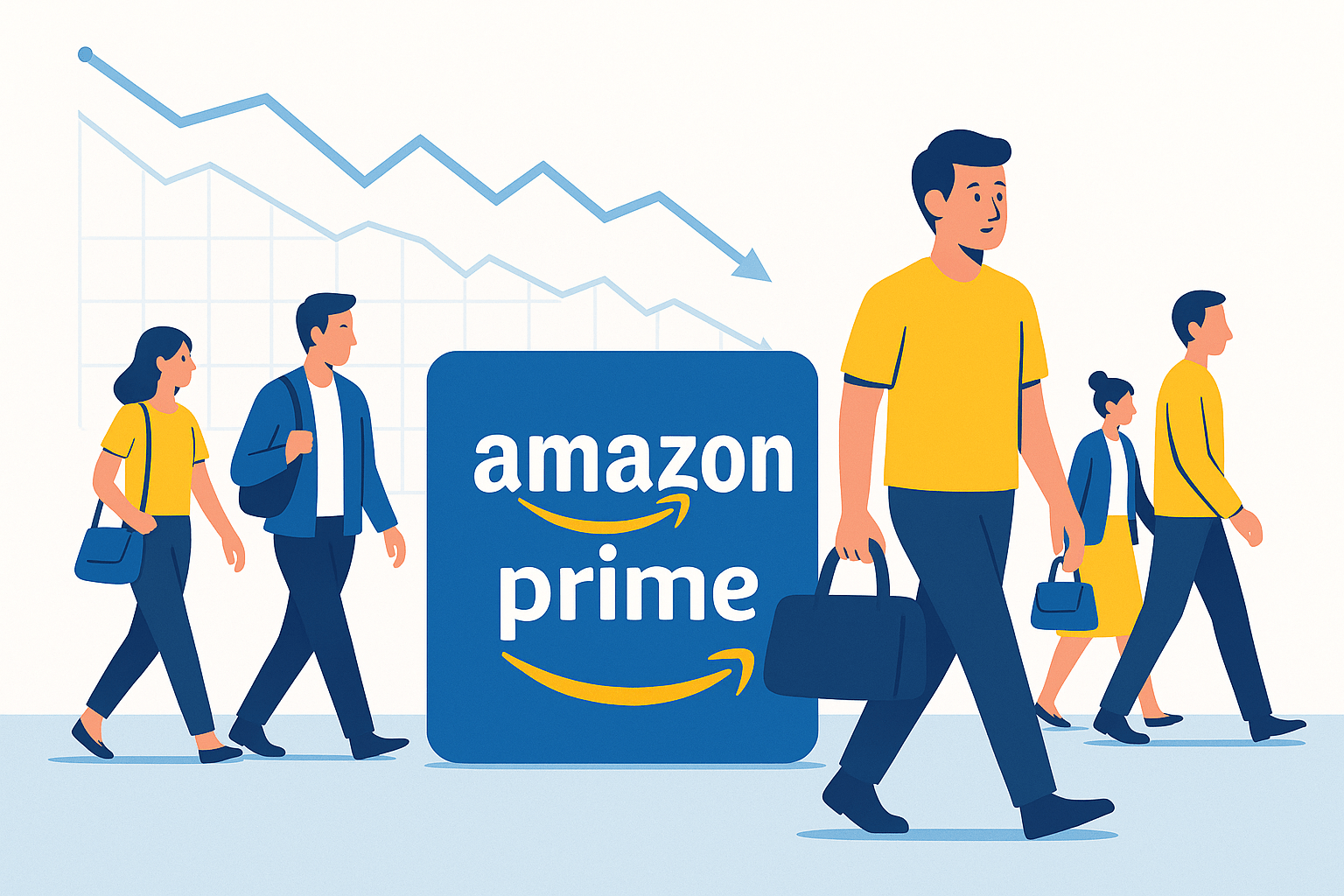
Is Amazon Prime losing customers?
Is Amazon Prime losing customers?
Introduction:
For more than a decade, Amazon Prime has stood as the world’s most dominant subscription-based ecosystem—an all-in-one gateway for fast delivery, streaming media, cloud storage, exclusive deals, and an ever-expanding array of Amazon-owned services. Its unprecedented growth positioned Prime not simply as a loyalty program but as a behavioral anchor: once consumers subscribed, most shifted the majority of their online shopping to Amazon.
However, markets evolve. Consumer behaviors shift. Competitive landscapes get more sophisticated. And over the last 24 months, a recurring question has circulated across business circles, investment forums, and consumer communities.
Want to scalse your amazon business to 7-8 figures? Contact eCom Gliders Visit Now!
Understanding Prime’s Core Value Proposition:
To evaluate whether Prime is losing customers, we must first understand what Prime fundamentally represents.
Prime as an Ecosystem:
Prime is not a standalone service. It is a multi-layer stack consisting of:
- Fast shipping (1-day & same-day delivery in eligible regions)
- Prime Video (originals, licensed content, live sports)
- Prime Music (previously full access → now limited tier)
- Prime Reading
- Amazon Photos & cloud storage
- Prime Day and exclusive shopping benefits
- Amazon Fresh & Whole Foods discounts
- Try Before You Buy fashion program
- Gaming benefits via Prime Gaming
This complexity matters. When consumers decide to keep or cancel Prime, they evaluate multiple layers of value, not just shipping or streaming.
The Psychological Anchor of Prime:
A large portion of Prime’s historical success comes from:
- habit formation (Amazon becomes the default online shopping destination)
- perceived sunk cost (“I’m aleady paying for it, so I should buy more from Amazon”)
- fear of inconvenience (losing fast delivery feels like losing convenience)
If these psychological advantages weaken, Prime’s retention weakens.
Indicators Suggesting Prime May Be Losing Customers:
While Amazon does not frequently disclose exact subscriber counts, numerous industry indicators can be analyzed to understand the trend.
Price Increases and Their Behavioral Impact:
Prime has raised subscription prices multiple times in major markets. Price increases are not inherently harmful—but they reset consumer expectations. Each increase forces customers to reevaluate:
- “Do I still use Prime enough?”
- “Is the shipping benefit worth it?”
- “Am I paying for too many subscriptions already?”
Given rising subscription fatigue, even a small reevaluation can lead to cancellation.
Fragmentation of the Streaming Landscape:
Prime Video plays a major role in overall Prime value. But recent changes have weakened its appeal:
- Introduction of ads in Prime Video, with an additional cost to remove them
- Fragmentation of popular content
- Stronger competition from Netflix, Disney+, Max, and YouTube Premium
- Regression of Amazon-produced originals vs. earlier hits like The Boys or Jack Ryan
Customers who joined Prime for entertainment are now questioning the value.
Decline in Retail Loyalty:
A shift is occurring: consumers are no longer treating Amazon as automatically the “cheapest” or “fastest.”
Key factors:
- Many products are more expensive on Amazon due to seller fees
- Shipping speeds have become inconsistent in some regions
- Competitors like Walmart+, Temu, Shein, and Target have expanded aggressively
- Consumers increasingly check multiple marketplaces rather than defaulting to Amazon
The erosion of Amazon’s dominance in retail directly impacts Prime retention.
Anti-Big Tech Sentiment:
Consumers are becoming more conscious about:
- data privacy
- corporate monopoly behavior
- environmental concerns
- labor treatment in warehouses
- the carbon footprint of fast delivery
While still a minority factor, growing anti-Amazon sentiment influences cancellations.
Subscriptions Are Under More Scrutiny Than Ever:
Post-pandemic inflation triggered a phenomenon known as “subscription deflation.”
People are cancelling unused subscriptions en masse. A household audit trend has emerged:
- Cancel streaming duplicates
- Cancel unused apps
- Cancel recurring memberships
- Reduce recurring expenses
Prime is often on the chopping block because of its visibility and relatively high cost.
Want to take your eCommerce performance to the next level?
Get a free, expert audit tailored to your store’s growth potential.
🚀 Get Your Free AuditIndicators That Prime Is Still Growing—or At Least Holding Steady:
To balance the analysis, it is important to highlight signals that show resilience.
Prime Is Still Rooted in Daily Consumer Habits:
Prime is not just a subscription; it is integrated into:
- grocery shopping
- household essentials
- entertainment
- device ecosystem (Fire TV, Alexa, Kindle)
This integration creates a powerful retention loop.
Amazon’s Logistics Network Is Still Unmatched:
No other retailer on Earth can deliver:
- millions of SKUs
- in 24 hours
- at national scale
- without charging per delivery
Even with competition improving, Amazon remains best-in-class in most regions.
Amazon Continues to Add Incentives:
Amazon strategically expands Prime-exclusive benefits:
- exclusive deals
- exclusive pre-order access
- fast grocery delivery
- coupon systems
- hardware bundle discounts
- Prime-exclusive apps & features
These additions help counterbalance price increases.
Global Expansion Continues:
Prime keeps launching and expanding into new countries with large populations. Even if U.S. or European retention fluctuates, global growth can offset losses.
Regional Breakdown: Where Prime Is Struggling and Where It’s Growing:
Customer losses or stagnation are not uniform across regions. Let’s analyze the three major Prime markets.
United States (Most Important Market):
Signs of Weakening:
U.S. customers are showing:
- subscription fatigue
- increased price sensitivity
- competition awareness
- frustration with streaming changes
- dissatisfaction with slower deliveries in certain cities
Additionally, Walmart+ is growing quickly with its own strong incentive: fuel discounts, something Amazon cannot easily replicate.
Strengths That Keep Prime Alive:
The U.S. market enjoys:
- the most optimized Amazon logistics
- the fastest Prime delivery times
- Prime Video’s biggest library
- Whole Foods and Fresh integration
Thus, even if churn rises, severe decline is unlikely.
Europe (Mixed Trend):
Countries Where Prime Is Stable or Growing:
- Germany
- United Kingdom
- France
These markets benefit from strong Amazon adoption and urban density.
Countries Showing Slowdown:
- Italy
- Spain
- Nordic countries (less reliance on e-commerce monopolization)
The issues include weaker logistics penetration, stronger local retailers, and lower consumer tolerance for subscription creep.
Emerging Markets (Prime Growing Aggressively):
Countries such as:
- India
- Brazil
- Mexico
- Middle East markets
have strong Prime adoption growth due to:
- fast-growing middle classes
- competitive local pricing
- Prime Video becoming a major cultural asset
fewer competing subscription ecosystems
Pros
- Fast delivery network
- Large product catalog
- Prime Video access
Cons
- Subscription price increases
- Ads added to streaming
- Stronger competition emerging
Why Customers Cancel Prime:
To understand the “loss” question deeply, we need to divide cancellation motivations into categories.
Functional Cancellations:
Functional cancellations occur when consumers realize they are no longer using the benefits enough.
Common triggers:
- decreased Amazon shopping
- purchases migrating to Walmart, Temu, Target, Shein
- a shift toward in-store shopping post-pandemic
- fewer entertainment interests on Prime Video
- grocery behavior moving to local chains
Mirroring trends show consumers are no longer buying as many discretionary items, which reduces reliance on fast delivery.
Cost-Driven Cancellations:
People cancel Prime because of:
- price hikes
- rising cost of living
- loss of ad-free streaming
- stacking too many monthly bills
- feeling “nickel-and-dimed”
Consumers increasingly feel companies are carving up services and charging multiple layers for features that once were included.
Emotional or Ethical Cancellations:
Less common, but real:
- concerns about warehouse worker conditions
- shift away from big tech platforms
- sustainability concerns
- desire to “support local”
These cancellations are usually permanent and driven by long-term attitudes.
The Competitive Battlefield: Who Is Taking Customers Away?
Amazon is not losing customers in a vacuum. Several companies are directly responsible for Prime churn.
Walmart+:
Amazon’s closest competitor, with advantages:
- fuel discounts
- grocery dominance
- strong brick-and-mortar integration
- improved delivery speeds
- lower subscription price
Many U.S. households subscribe to both, but cancellations often shift toward Walmart+ when budgets tighten.
Target & Shipt:
Target’s same-day delivery and Drive Up pickup appeal to suburban families. While not a direct Prime competitor, it pulls away shopping volume.
Temu & Shein:
These platforms are reshaping:
- consumer expectations of price
- non-branded product shopping
- impulse purchase habits
- discount culture
Their ultra-low prices reduce Amazon’s perceived value, especially for fashion and novelty items.
Spotify & Netflix & Disney+ (Streaming Competitors):
Streaming fragmentation causes reconsideration of Prime Video value. Now that Prime Video includes ads, customers feel they are being charged more for less.
Local Retailers (Global Impact):
In Europe, Middle East, and Asia, Amazon faces powerful local players who offer:
- competitive speeds
- culturally relevant services
- stronger brand trust
This reduces Prime reliance.
Strategic Missteps by Amazon That Contribute to Churn:
Amazon isn’t losing customers randomly. Several measurable decisions contributed to customer dissatisfaction.
Adding Ads to Prime Video:
This decision alone created a “value shock,” causing customers to feel:
- betrayed
- overcharged
- disappointed
- forced to upgrade
Consumer sentiment analysis on social platforms shows strong negative reactions.
Reducing Prime Music Value:
Previously full access → now limited access
Customers feel this is a downgrade.
Overemphasis on Upselling:
Consumers increasingly report seeing
- more sponsored listings
- more third-party seller clutter
- less trust in product reviews
- inconsistent product quality
This reduces Amazon’s “premium feel.”
Inconsistent Delivery Speeds:
In certain suburbs and small towns, the delivery reliability that once defined Prime has weakened, reducing its justification.
The Future: What Amazon Might Do to Offset Customer Losses:
To maintain subscriber strength, Amazon is likely to deploy several strategies.
Innovating New Prime Benefits:
Potential future additions may include:
- enhanced grocery delivery perks
- deeper Whole Foods integrations
- health services partnerships
- mobility perks (e-bike rentals, EV charging discounts)
- extended AI-powered shopping tools
Strengthening Prime Video:
Amazon is investing heavily into:
- live sports (NFL, Premier League, Cricket)
- blockbuster originals
- licensing deals
- improving discovery and UI
Streaming remains a powerful retention lever.
Reinforcing Logistics Superiority:
Amazon continues to build micro-fulfillment centers and expand drone delivery testing, aiming for national same-day coverage in the U.S. by 2027.
Introducing Tiered Membership:
We may eventually see:
- Prime Basic (with ads, fewer perks)
- Prime Plus (ad-free, enhanced benefits)
- Prime Family bundles
This creates price flexibility, reducing churn among budget-conscious households.
Conclusion:
Amazon Prime sits at a pivotal moment in subscription history. It is no longer a novelty; it is an institution facing new consumer expectations, fierce competition, and shifts in digital spending priorities.
Prime is not collapsing.
Prime is not disappearing.
But Prime is changing.
Some customers are leaving—not because the service is bad, but because the subscription landscape has evolved, and consumers are more analytical, more selective, and more empowered than ever before.
Amazon’s ability to upgrade Prime’s value proposition over the next 3–5 years will determine whether Prime remains the world’s most influential membership ecosystem—or becomes just another subscription fighting for household attention.
Why are people cancelling Amazon Prime in 2025?
Is Amazon Prime still worth it for most households?
Will Amazon reduce prices or offer cheaper Prime plans?
-
Mary
- Reading time 10 min
Recent Posts
- All Post
- Amazon Compliance
- Amazon FBA Guide
- amazon market analysis
- Amazon PPC
- Amazon PPC & Advertising
- Amazon SEO
- Amazon Stock
- Amazon Tools
- Business Strategy
- eCommerce
- Ecommerce News & Analysis
- Full Account Management Services
- Guide
- Guide 2025
- News
- News 2026
- PPC Services
- Prime day
- Stories
- Team Memebers
- Technology and Digital Services
- Top Agencies
- Top PPC tools
- Why we are Unique?
Get a Quick Solution
Need help fast? Our expert team is here to provide you with efficient and reliable solutions tailored to your needs. Don’t wait—reach out today!
Categories
- Amazon Compliance (5)
- Amazon FBA Guide (7)
- amazon market analysis (5)
- Amazon PPC (42)
- Amazon PPC & Advertising (4)
- Amazon SEO (9)
- Amazon Stock (1)
- Amazon Tools (17)
- Business Strategy (12)
- eCommerce (2)
- Ecommerce News & Analysis (6)
- Full Account Management Services (105)
- Guide (1)
- Guide 2025 (20)
- News 2026 (16)
- PPC Services (58)
- Prime day (2)
- Technology and Digital Services (1)
- Top PPC tools (1)
- Uncategorized (1)
- Why we are Unique? (11)
Subscribe for Growth Tips, Seller Hacks & eCom Wins