Long Term PPC Success on Amazon Winning Strategies for 2026 to 2030
Long Term PPC Success on Amazon Winning Strategies for 2026 to 2030
Introduction:
Amazon advertising is entering a mature phase where success is no longer defined by aggressive bidding or short bursts of growth. Between 2026 and 2030 Amazon PPC will reward brands that think in systems not tactics. The platform is moving toward deeper automation stronger artificial intelligence decision making and a stronger connection between advertising performance brand equity and customer lifetime value. This blog presents an advanced professional framework for building long term PPC success on Amazon with a focus on sustainability profitability and resilience in an increasingly competitive marketplace.
Understanding the Amazon Advertising Evolution:
Amazon PPC is no longer just a keyword auction. It is a predictive ecosystem that evaluates shopper behavior product relevance brand trust pricing stability inventory health and historical performance simultaneously. From 2026 onward the algorithm will place even greater weight on long term signals rather than short term optimizations.
Key forces shaping this evolution include:
Increased reliance on machine learning models that anticipate conversion probability rather than reacting to past clicks 2 Reduced transparency in customer level data requiring higher level analytical thinking 3 Greater integration of Sponsored Ads Amazon DSP and off Amazon traffic signals 4 Stronger prioritization of brand consistency and customer experience.
Advertisers who fail to adapt to these forces will experience rising costs declining efficiency and unstable performance.
Building a Long Term PPC Foundation:
Long term success begins with strategic foundations that remain stable even as tactics evolve.
Strategic Account Architecture:
A scalable account structure must serve clarity control and adaptability. Poor structure creates data noise and weakens algorithm learning.
Core principles include:
Clear separation between branded non branded competitor and product targeting campaigns 2 Isolation of top performing keywords into dedicated campaigns for precise bid control 3 Dedicated experimentation campaigns to protect core performance data 4 Portfolio level grouping based on business objectives such as growth defense or profitability
This structure ensures that insights remain actionable and that algorithm learning aligns with business goals.
ASIN Centric Management:
From 2026 to 2030 Amazon will increasingly evaluate performance at the ASIN level. Each ASIN should be treated as a standalone profit center.
Best practices include:
Defining target advertising efficiency for each ASIN based on lifecycle stage 2 Aligning bids with inventory depth and replenishment timelines 3 Reducing exposure on ASINs with unstable margins or inconsistent supply
This approach prevents advertising from masking underlying operational weaknesses.
Ready to future proof your Amazon PPC strategy
Get a professional Amazon PPC audit tailored for long term growth and profitability
Get Your Free Amazon PPC AuditAdvanced Keyword Intelligence for the Next Decade:
Keyword research is shifting from discovery to intelligence. The goal is not to find keywords but to understand intent evolution.
Predictive Keyword Planning:
Rather than reacting to performance data advertisers must anticipate shifts in demand.
Advanced techniques include:
Analyzing multi year seasonality patterns to preempt demand surges 2 Mapping keywords to awareness consideration and purchase stages 3 Monitoring impression velocity to detect emerging search behavior before competition intensifies
Predictive planning allows brands to secure relevance and efficiency ahead of market shifts.
Semantic Targeting and Intent Clusters:
Amazon search now interprets meaning not just exact phrasing.
Strategic actions include:
Building keyword clusters around themes rather than individual phrases 2 Using phrase and broad match to train relevance while controlling waste through negatives 3 Evaluating performance at the cluster level rather than isolated keywords
This creates a more resilient targeting system that adapts to evolving search behavior.
Automation as a Strategic Ally Not a Replacement:
Automation will dominate Amazon PPC from 2026 onward but only disciplined advertisers will benefit.
Guiding the Algorithm:
Automation should execute strategy not define it.
Key principles include:
- Setting clear bid boundaries and placement controls.
Using automation for scale efficiency and speed.
Regularly auditing automated outcomes through search term and placement analysis
This ensures automation amplifies strategic intent rather than eroding margins.
Portfolio Level Control:
Portfolio optimization will become a primary lever for spend governance.
Best practices include:
- Grouping campaigns by similar profit expectations
Using portfolio budgets to manage spend velocity and risk
Evaluating success at the portfolio level rather than isolated campaigns
Portfolio thinking aligns advertising investment with broader financial objectives.
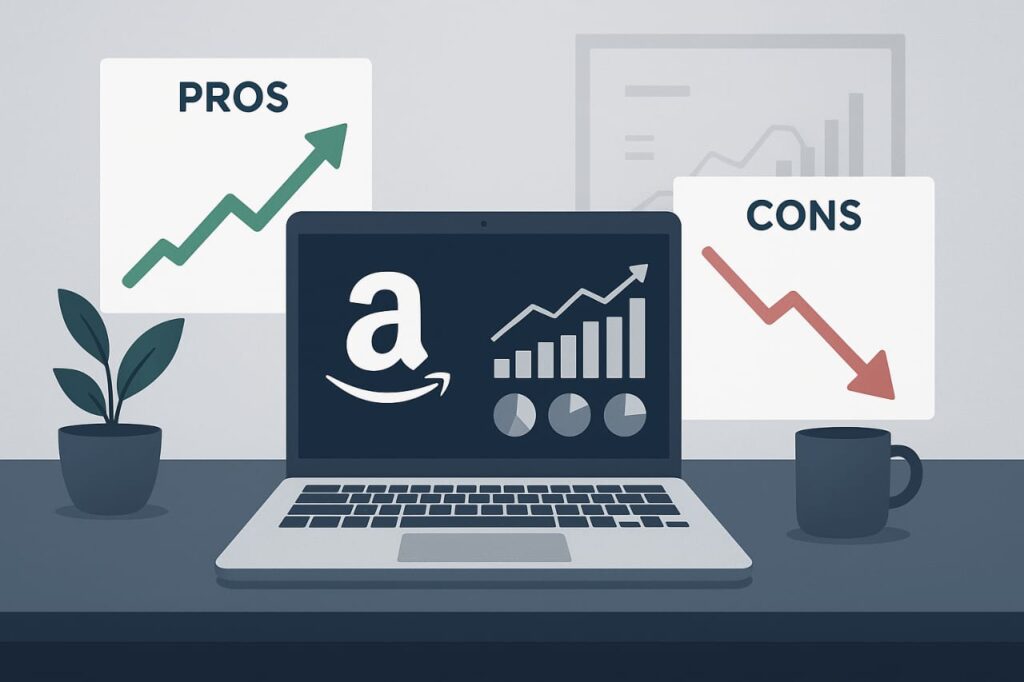
| Pros | Cons |
|---|---|
| Builds sustainable profitability instead of short term sales spikes | Requires patience before measurable results appear |
| Improves algorithm trust through consistent performance signals | Demands advanced data analysis and strategic planning |
| Protects brand equity and strengthens market position | Higher upfront investment in optimization and creative assets |
| Reduces risk from sudden cost per click inflation | Less flexibility for aggressive short term scaling |
| Aligns advertising with long term customer lifetime value | Requires continuous monitoring as Amazon systems evolve |
Conversion Rate Optimization as a Core PPC Strategy:
Advertising efficiency is directly tied to conversion performance. Higher conversion rates lower acquisition costs and strengthen algorithm confidence.
Listing Excellence for Advertising Performance:
Critical focus areas include:
Clear benefit driven titles aligned with search intent.
Visual storytelling through high quality images and infographics.
A plus content designed to reduce uncertainty and build trust
Even minor conversion improvements can compound significantly over time.
Brand Store Integration:
Sponsored Brand performance increasingly depends on store quality.
Advanced strategies include:
Creating category focused store pages aligned with ad messaging.
Continuously testing store layouts and navigation paths
Using store analytics to inform advertising creative and targeting
A strong store reinforces brand authority and improves overall advertising efficiency.
Budgeting for Long Term Stability:
Short term budget decisions often undermine long term performance.
Strategic Budget Allocation:
From 2026 to 2030 budgets should be allocated based on strategic roles rather than equal distribution.
Guidelines include:
Investing heavily in high lifetime value ASINs.
Maintaining defensive budgets for branded terms .
Allocating controlled budgets for experimentation and innovation
This ensures that growth does not come at the expense of profitability or stability.
Seasonal and Lifecycle Budgeting:
Budgets should flex based on demand cycles and product maturity.
Actions include:
Increasing spend ahead of peak seasons to capture early demand.
Reducing exposure during low conversion periods
Gradually shifting spend from acquisition to efficiency as products mature
Lifecycle based budgeting supports sustainable growth.
Measuring What Matters Beyond ACOS:
Traditional metrics alone are insufficient for long term success.
Advanced Performance Metrics:
Future focused advertisers will prioritize:
Contribution margin after advertising
Customer lifetime value influenced by PPC
New to brand acquisition efficiency
Repeat purchase behavior driven by advertising exposure
These metrics provide a clearer picture of true business impact.
Incrementality and Attribution:
As attribution models evolve advertisers must understand incremental impact.
Approaches include:
Comparing performance with and without advertising exposure .
Evaluating assisted conversions across ad types .
Using DSP and brand metrics to understand upper funnel influence
Incrementality thinking prevents over investment in low impact spend.
Building Internal Capabilities for the Future:
Technology alone is not enough. Teams and processes matter.
Skill Development:
Future PPC teams must blend analytical strategic and creative skills.
Focus areas include:
Data interpretation and forecasting.
Creative testing and messaging alignment
Cross functional collaboration with operations and branding teams
Strong capabilities ensure long term competitiveness.
Process Discipline:
Consistent processes create predictable results.
Best practices include:
Regular performance reviews focused on trends not daily fluctuations.
Documented testing frameworks.
Clear decision making criteria aligned with business goals
Discipline enables scalable growth.
Conclusion:
Long term PPC success on Amazon from 2026 to 2030 will belong to brands that think beyond bids and budgets. Sustainable performance will be driven by strategic foundations intelligent automation conversion excellence and deep alignment between advertising and overall business objectives. By focusing on systems rather than shortcuts advertisers can build resilient profitable PPC programs that thrive in an increasingly complex Amazon ecosystem.
How often should Amazon PPC strategies be reviewed for long term success?
Is automation safe for long term Amazon PPC management?
What is the most important factor for PPC success between 2026 and 2030?
-
Mary
- December 14, 2025
- 6:47 pm
- Reading time 5 min
Recent Posts
- All Post
- Amazon Compliance
- Amazon FBA Guide
- amazon market analysis
- Amazon PPC
- Amazon Stock
- Amazon Tools
- Business Strategy
- Ecommerce News & Analysis
- Full Account Management Services
- Guide
- Guide 2025
- News
- News 2026
- PPC Services
- Prime day
- Stories
- Team Memebers
- Technology and Digital Services
- Top Agencies
- Top PPC tools
- Why we are Unique?

Get a Quick Solution
Need help fast? Our expert team is here to provide you with efficient and reliable solutions tailored to your needs. Don’t wait—reach out today!
Categories
- Amazon Compliance (5)
- Amazon FBA Guide (6)
- amazon market analysis (2)
- Amazon PPC (30)
- Amazon Stock (1)
- Amazon Tools (17)
- Business Strategy (12)
- Ecommerce News & Analysis (6)
- Full Account Management Services (106)
- Guide 2025 (20)
- News 2026 (16)
- PPC Services (58)
- Prime day (2)
- Technology and Digital Services (1)
- Top PPC tools (1)
- Why we are Unique? (11)
Subscribe for Growth Tips, Seller Hacks & eCom Wins