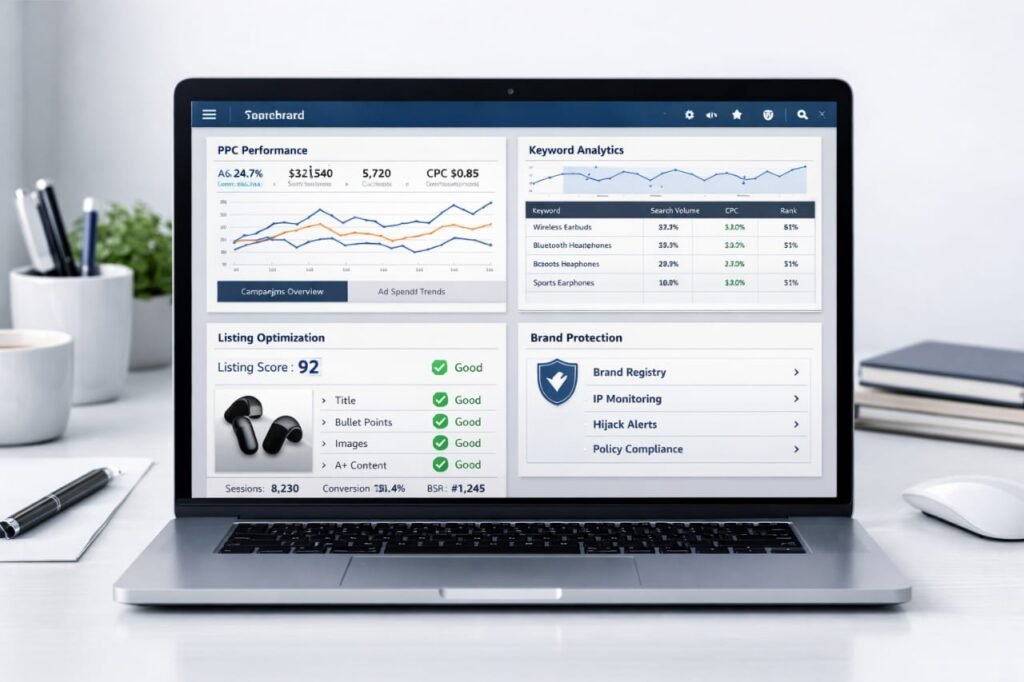
Can I Make 1000 Dollars a Month Selling on Amazon?
Can I Make 1000 Dollars a Month Selling on Amazon?
Introduction:
The idea of building a reliable income stream through Amazon has captured the attention of entrepreneurs across the world. As the marketplace continues its expansion and technological advancements reshape how buyers discover and purchase products, aspiring sellers want to know whether it is still possible to earn a consistent four figure monthly profit. The most common target among new sellers is one thousand dollars a month. It sounds achievable, meaningful, and realistic. Yet the true answer requires a deeper understanding of the Amazon ecosystem, profit dynamics, competition structure, operational demands, and strategic execution.
This extensive guide explores whether earning one thousand dollars per month is truly achievable for the modern Amazon seller. The answer is yes, but the result depends on business model selection, capital management, compliance obligations, marketing skill, data competence, and ongoing optimization. In this article, you will learn in detail how different Amazon business models work, how much investment you need, how to analyze product opportunities with precision, how profit margins operate in real environments, and what performance benchmarks you must meet. You will also learn what hidden challenges new sellers encounter and how advanced sellers scale their operations from a single product to multi product empires.
This article aims to deliver a deep professional level examination that helps you evaluate whether Amazon selling aligns with your goals, skills, timeline, and risk comfort. By the end, you will have a full strategic framework to pursue the one thousand dollar monthly profit milestone and beyond.
Understanding the Amazon Ecosystem:
Before diving into profit potential, it is essential to understand the structure of Amazon itself. Amazon is not only a retail marketplace. It is a complex technological, logistical, and data driven system with multiple moving parts and continuously evolving policies. Every seller interacts with the Amazon algorithm, fulfillment network, customer service ecosystem, customer behavior analytics, and advertising engine.
Amazon’s Marketplace Structure:
The major components include:
Amazon Marketplace:
The platform where third party sellers list products. It operates on a ranking system governed by the A9 or A10 search algorithm which determines the visibility of each listing.
Fulfillment by Amazon:
Commonly referred to as FBA. Amazon stores inventory in its fulfillment centers and handles picking, packing, shipping, returns, and customer service. This creates greater visibility for sellers because Amazon prioritizes Prime eligible products.
Fulfillment by Merchant:
Usually abbreviated as FBM. Sellers manage their own storage, shipping, packaging, and customer service. This reduces fees but demands more operational work.
Amazon Advertising System:
A powerful pay per click environment in which sellers bid for visibility. Advertising performance significantly affects ranking, conversion rate, and organic sales velocity.
Customer Trust Layer:
Amazon maintains strict standards for product quality, shipping performance, and customer satisfaction. Violating these standards leads to account warnings or suspension.
Understanding these structural components is essential because the ability to earn one thousand dollars each month depends on how well you navigate each element.
Major Factors That Determine Profitability:
Business Model Selection:
There are four primary business models on Amazon. Each has different startup costs, workload requirements, and profit potential.
Private Label:
You create your own brand by sourcing products from a manufacturer, adding custom improvements, packaging under your own brand identity, and marketing the product aggressively. This model offers the highest long term profit potential because you control pricing and brand equity. It also demands the greatest initial investment for inventory, branding, photography, and advertising.
Most private label sellers aim for profit margins between twenty and thirty percent, and making one thousand dollars per month is realistic with only one or two successful products.
Wholesale:
You purchase products from established brands or distributors and resell them on Amazon. The margins are lower but the risk of failure is reduced because you sell items with proven market demand. This model usually requires moderate capital but lower marketing expenses.
Online Arbitrage:
You buy discounted retail products from online stores and resell them on Amazon at a higher price. This method requires skill in product analysis and constant deal hunting. Profit margins vary widely. Although online arbitrage can generate one thousand dollars per month, it demands consistent sourcing effort.
Retail Arbitrage:
You physically visit stores to find discounted deals you can resell on Amazon. This model requires time and mobility but can offer strong returns for sellers who can source profitable items consistently. However scaling beyond a few thousand dollars per month becomes difficult due to sourcing limitations.
Understanding your personal strengths and constraints will help you determine which model provides the highest chance of reaching your goal.
Startup Budget:
Your initial investment significantly affects how quickly you can reach the one thousand dollar profit target. A rough guideline is:
Private Label:
Two thousand to ten thousand dollars
Wholesale:
One thousand to five thousand dollars
Online Arbitrage:
Three hundred to two thousand dollars
Retail Arbitrage:
Two hundred to one thousand dollars
These are not fixed costs but typical ranges that allow sellers to purchase enough inventory to generate the required monthly sales volume.
Profit Margin Structure:
To earn one thousand dollars each month, you must understand how margins operate on Amazon. You do not keep the entire selling price. You must consider the following deductions:
- Amazon referral fee
- Amazon fulfillment fee
- Storage costs
- Advertising costs
- Supplier cost
- Inbound shipping
- Returns and replacements
- Inventory preparation expenses
A realistic net margin for most sellers is between ten and thirty percent depending on the product category, model, and operational efficiency.
If your margin is twenty percent, you would need five thousand dollars in monthly revenue to earn one thousand dollars in profit. If your margin is fifteen percent, you would need around sixty six hundred dollars in monthly revenue.
Understanding this math is essential. Many beginners mistakenly think they only need to sell one thousand dollars worth of goods. In reality achieving one thousand dollars in profit requires a structured revenue plan.
Product Selection Strategy:
Product selection is the single most important factor for achieving profitability. Even with excellent marketing, operational skill, and capital management, a poorly selected product will not generate consistent sales.
Advanced product selection involves:
- Market demand accuracy
- Competitive analysis
- Listing quality benchmarking
- Keyword gap identification
- Profit margin modeling
- Supplier consistency
- Retail price stability
- Risk exposure analysis
A strong product should have steady demand, manageable competition, clear differentiation opportunities, predictable profits, and reliable sourcing.
Sales Velocity:
To earn one thousand dollars in monthly profit, you must maintain stable daily sales. For example:
If your profit per unit is five dollars, you would need two hundred sales per month or around seven sales per day.
If your profit per unit is ten dollars, you would need one hundred sales per month or around three to four sales per day.
Understanding your target sales velocity helps you reverse engineer your entire business plan.
Advertising Skill:
Amazon is a data driven advertising environment. Mastering pay per click advertising is essential for ranking products, maintaining visibility, and scaling sales.
Advanced advertising components include:
- Match type analysis
- Keyword harvesting
- Data driven bid adjustments
- Competitive targeting
- Product targeting
- Placement optimization
- Search term conversion tracking
- Advertising cost of sales management
A seller who understands advertising strategy can achieve sustainable profitability even in competitive markets. A seller who ignores advertising will struggle to reach one thousand dollars per month.
Listing Optimization:
Your product listing must be optimized for:
- Keyword indexing
- Conversion rate
- Image quality
- Information clarity
- Feature presentation
- Benefits demonstration
- Competitor comparison
The stronger your listing, the more visibility and conversions you achieve.
Let us guide you toward building a stronger and more profitable business
How Many Products Are Needed to Make One Thousand Dollars a Month:
The number of products required depends on your profit per unit.
Scenario One: Ten Dollar Profit Per Unit:
If you earn ten dollars per sale, you need around one hundred monthly sales.
If your product sells three to four units per day, you can reach your goal with one product.
Scenario Two: Seven Dollar Profit Per Unit:
You would need around one hundred forty five monthly sales, or about five per day.
One or two products can accomplish this target.
Scenario Three: Five Dollar Profit Per Unit:
At five dollars profit, you need two hundred monthly sales or about seven per day.
You might need two to three products depending on market performance.
This shows that achieving one thousand dollars per month is not only possible but achievable with a small product catalog when executed correctly.
Advanced Product Research Techniques:
To reach the profit target consistently, beginners must understand advanced product research strategies used by successful sellers.
Market Stability Analysis:
Look for products with demand consistency by analyzing twelve month historical data. Spikes or seasonal fluctuations limit your ability to maintain monthly profit.
Competitive Weakness Identification:
Find listings with poor images, weak descriptions, unclear differentiation, or negative reviews. These present strong opportunities for improvement.
Price Elasticity Evaluation:
Determine whether the market is price sensitive. A highly price sensitive market reduces your margin flexibility and increases risk.
Supply Chain Strength:
Ensure suppliers offer:
- Stable pricing
- Quality control standards
- Product customization options
- Volume discounts
- Reasonable lead times
A weak supply chain destroys profitability.
Keyword Demand Saturation:
Analyze how many unique keywords drive traffic to the top listings. Products with a wide range of keywords offer safer opportunities than products dependent on only one or two major keywords.
Earning Potential
With strong research and optimized listings sellers can achieve one thousand dollars each month through consistent sales velocity and efficient advertising.
Market Analysis
Accurate data review competitive evaluation and long term demand tracking allow sellers to select stable products that support monthly profit goals.
Product Strategy
Selecting items with strong demand reliable supply chains and clear differentiation increases the chance of achieving consistent four figure profit months.
Capital Requirements to Earn One Thousand Dollars Monthly:
To realistically achieve one thousand dollars monthly, you must maintain adequate inventory. Running out of stock drops your ranking and destroys momentum.
The formula to calculate minimum inventory required is:
Daily sales x 45 days + buffer inventory
If you aim for four sales per day, you need at least one hundred eighty sales plus a buffer.
Your capital must support an inventory cycle that includes production time, shipping time, restock preparation time, and Amazon receiving time.
Understanding the Amazon Algorithm:
The Amazon algorithm rewards listings that deliver high conversion rates, strong sales velocity, and reliable customer satisfaction. To reach your profit target, you must align your listing and advertising with the algorithm.
Key Algorithm Influences:
- Organic search relevance
- Keyword placement
- Sales velocity
- Click through rate
- Conversion rate
- Customer satisfaction metrics
- Account health status
Mastering these influences ensures consistent revenue flow.

How Long Does It Take to Make One Thousand Dollars Per Month:
Most sellers who follow a disciplined strategy achieve this goal within three to nine months. The timeline depends on:
- Capital amount
- Business model
- Product selection
- Advertising skill
- Industry competitiveness
- Operational execution
Some sellers reach one thousand dollars in their first month while others take a year. The key is consistency and data driven decision making.
Scaling Beyond One Thousand Dollars Per Month:
Once you reach one thousand dollars in monthly profit, scaling becomes easier because you already understand the fundamental components of success. To scale further:
- Add new products
- Improve advertising strategy
- Increase inventory volume
- Expand your brand presence
- Improve supplier relationships
- Explore Amazon international marketplaces
Many sellers who reach one thousand dollars monthly eventually grow to five thousand or ten thousand dollars monthly.
Conclusion:
The goal of earning one thousand dollars per month selling on Amazon is entirely achievable for individuals who adopt the correct strategies, understand marketplace dynamics, and commit to continuous improvement. Success depends on disciplined product selection, data driven decision making, strong listing optimization, smart advertising management, consistent inventory control, and a deep understanding of customer behavior.
Amazon is a competitive environment, but it rewards sellers who embrace professionalism, precision, and adaptability. By mastering the core components outlined in this extensive guide, you can confidently build a profitable Amazon business that delivers stable income and long term growth. The one thousand dollar milestone is not only achievable but can be a foundation for much larger success.
pulvinar dapibus leo.
Do I need a large budget to make one thousand dollars a month?
How long does it take to start earning money on Amazon?
Can I run an Amazon business part time?
-
Mary
- November 30, 2025
- 4:54 pm
- Reading time 10 min
Recent Posts
- All Post
- Amazon Compliance
- Amazon FBA Guide
- amazon market analysis
- Amazon PPC
- Amazon Stock
- Amazon Tools
- Business Strategy
- Ecommerce News & Analysis
- Full Account Management Services
- Guide
- Guide 2025
- News
- News 2026
- PPC Services
- Prime day
- Stories
- Team Memebers
- Technology and Digital Services
- Top Agencies
- Top PPC tools
- Why we are Unique?


Get a Quick Solution
Need help fast? Our expert team is here to provide you with efficient and reliable solutions tailored to your needs. Don’t wait—reach out today!
Categories
- Amazon Compliance (5)
- Amazon FBA Guide (6)
- amazon market analysis (2)
- Amazon PPC (30)
- Amazon Stock (1)
- Amazon Tools (17)
- Business Strategy (12)
- Ecommerce News & Analysis (6)
- Full Account Management Services (106)
- Guide 2025 (20)
- News 2026 (16)
- PPC Services (58)
- Prime day (2)
- Technology and Digital Services (1)
- Top PPC tools (1)
- Why we are Unique? (11)
Subscribe for Growth Tips, Seller Hacks & eCom Wins