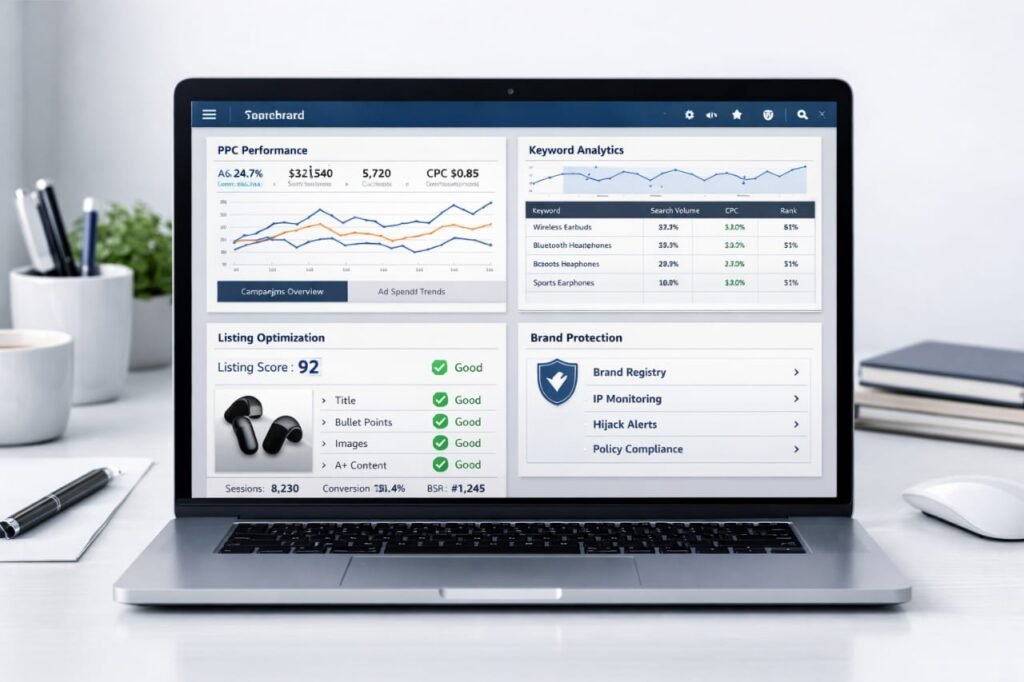
A system first bussiness stategory from decision frameworks to scalable growths.
A system first bussiness stategory from decision frameworks to scalable growths.
Introduction:
In most organizations, strategy is treated as a plan. In high-performing organizations, strategy is treated as a system.
Traditional business strategy focuses on goals, initiatives, and forecasts. While these elements matter, they are insufficient in complex, fast-changing markets. Goals expire, initiatives decay, and forecasts fail. What endures is the system that continuously produces high-quality decisions, aligns execution, and scales without collapsing under complexity.
A system-first business strategy does not ask, “What should we do next?” It asks, “What structure ensures we keep making the right decisions as the business grows?” This shift—from episodic planning to continuous strategic systems—is what separates scalable organizations from those that stall, fragment, or fail under their own growth.
This article presents an advanced, system-first approach to business strategy: how to design decision frameworks, align organizational mechanisms, and build scalable growth engines that compound over time.
What a System-First Business Strategy Really Means:
A system-first strategy treats the business as an interconnected set of decision-making mechanisms rather than a collection of isolated functions.
In this model:
Strategy is not a document; it is an operating logic
Execution is not follow-through; it is system output
Growth is not forced; it is structurally enabled
A strategic system consists of:
- Clear decision principles
- Repeatable frameworks
- Feedback loops
- Constraint-aware resource allocation
- Governance mechanisms that scale
Without these components, growth increases noise, not performance.
Decision Frameworks as the Core Strategic Asset:
At scale, competitive advantage is determined less by individual talent and more by the quality of decisions an organization makes repeatedly.
Principles Over Rules:
Rules break under novelty. Principles scale.
System-first organizations codify strategic principles such as:
Where the busines will and will not compete?
What trade-offs are non-negotiable?
How risk is evaluated?
What defines acceptable returns?
These principles guide decentralized decision-making without requiring constant executive intervention.
Strategic Filters:
Advanced organizations use strategic filters to eliminate poor decisions before they consume resources. Typical filters include:
Strategic fit
Margin structure
Operational complexity
Time-to-value
Long-term optionality
If a decision fails the filter, it is rejected regardless of short-term upside
A System-First Business Strategy Built for Long-Term, Scalable Growth
Advanced decision frameworks that turn strategy into a repeatable growth engine
Get in TouchStrategy as an Operating System, Not a Plan:
A business strategy should function like an operating system—governing how decisions are made, how resources are allocated, and how execution adapts.
This requires:
Defined inputs (data, signals, assumptions)
Processing logic (frameworks and models)
Outputs (prioritized actions, capital allocation, execution focus)
Organizations without this structure rely on intuition at scale, which leads to inconsistency and drift.
Structural Alignment: Strategy, Organization, and Incentives:
No strategy survives misaligned incentives.
System-first strategy demands alignment across:
Organizational design
Incentive structures
Performance metrics:
If teams are rewarded for local optimization, the system will sabotage global strategy.
Advanced organizations design incentives that reinforce strategic priorities, even when they create short-term friction.
Resource Allocation as a Strategic System:
Budgeting is strategy in numeric form.
System-first companies treat capital allocation as a dynamic process rather than an annual ritual. Resources flow toward:
Highest strategic leverage
Learning velocity
Long-term advantage creation
This often means underfunding visible initiatives in favor of structural capabilities.
Pros
• Establishes consistent, high-quality decision-making across the organization
• Enables scalable growth without increasing operational complexity
• Reduces dependency on individual leaders by institutionalizing strategy
• Improves long-term resilience against market and organizational shocks
Cons
• Requires significant upfront strategic thinking and system design effort
• Benefits may take time to materialize compared to tactical approaches
• Demands organizational discipline to maintain and evolve the system
• Can face resistance from teams used to ad-hoc or intuition-based decisions
Feedback Loops and Strategic Learning:
Scalable strategy requires institutional learning.
This includes:
Leading indicators, not lagging metrics
Post-decision reviews focused on assumptions, not blame
Fast signal detection for market shifts
Without feedback loops, strategy becomes ideology.
Scaling Without Strategic Dilution:
Growth introduces complexity. Systems absorb it.
A system-first approach enables:
Delegation without loss of coherence
Expansion without cultural erosion
Speed without chaos
This is achieved through standardization of decision logic, not micromanagement.
Strategic Governance at Scale:
Governance is not control; it is coherence.
Effective strategic governance:
Protects long-term priorities
Prevents resource drift
Maintains strategic integrity across units
Poor governance creates internal competition rather than market advantage.

Common Failure Modes of Non-System Strategies:
Organizations fail when:
Strategy lives only in leadership meetings
Decisions are made case-by-case
Growth outpaces structure
Execution feedback is ignored
These failures are structural, not tactical.
Building Your System-First Strategy: An Implementation Path:
Codify decision principles
Design strategic filtersAlign incentives and metrics
Build feedback loopsInstitutionalize learning
Continuously refine the system
Strategy is never finished. Systems evolve.
Conclusion:
In modern markets, sustainable success does not come from better plans—it comes from better systems.
A system-first business strategy transforms strategy from an episodic exercise into a continuous capability. By embedding decision frameworks, alignment mechanisms, and feedback loops into the organization, leaders create businesses that scale intelligently, adapt quickly, and compound advantage over time.
The future belongs to organizations that do not rely on heroic leadership or perfect forecasts, but on systems designed to produce consistently good decisions—at any scale, in any market.
How is a system-first strategy different from traditional strategic planning?
Can small or early-stage businesses use a system-first approach?
How long does it take to implement a system-first strategy?
-
Mary
- December 15, 2025
- 5:05 pm
- Reading time 5 min
Recent Posts
- All Post
- Amazon Compliance
- Amazon FBA Guide
- amazon market analysis
- Amazon PPC
- Amazon Stock
- Amazon Tools
- Business Strategy
- Ecommerce News & Analysis
- Full Account Management Services
- Guide
- Guide 2025
- News
- News 2026
- PPC Services
- Prime day
- Stories
- Team Memebers
- Technology and Digital Services
- Top Agencies
- Top PPC tools
- Why we are Unique?


Get a Quick Solution
Need help fast? Our expert team is here to provide you with efficient and reliable solutions tailored to your needs. Don’t wait—reach out today!
Categories
- Amazon Compliance (5)
- Amazon FBA Guide (6)
- amazon market analysis (2)
- Amazon PPC (30)
- Amazon Stock (1)
- Amazon Tools (17)
- Business Strategy (12)
- Ecommerce News & Analysis (6)
- Full Account Management Services (106)
- Guide 2025 (20)
- News 2026 (16)
- PPC Services (58)
- Prime day (2)
- Technology and Digital Services (1)
- Top PPC tools (1)
- Why we are Unique? (11)
Subscribe for Growth Tips, Seller Hacks & eCom Wins