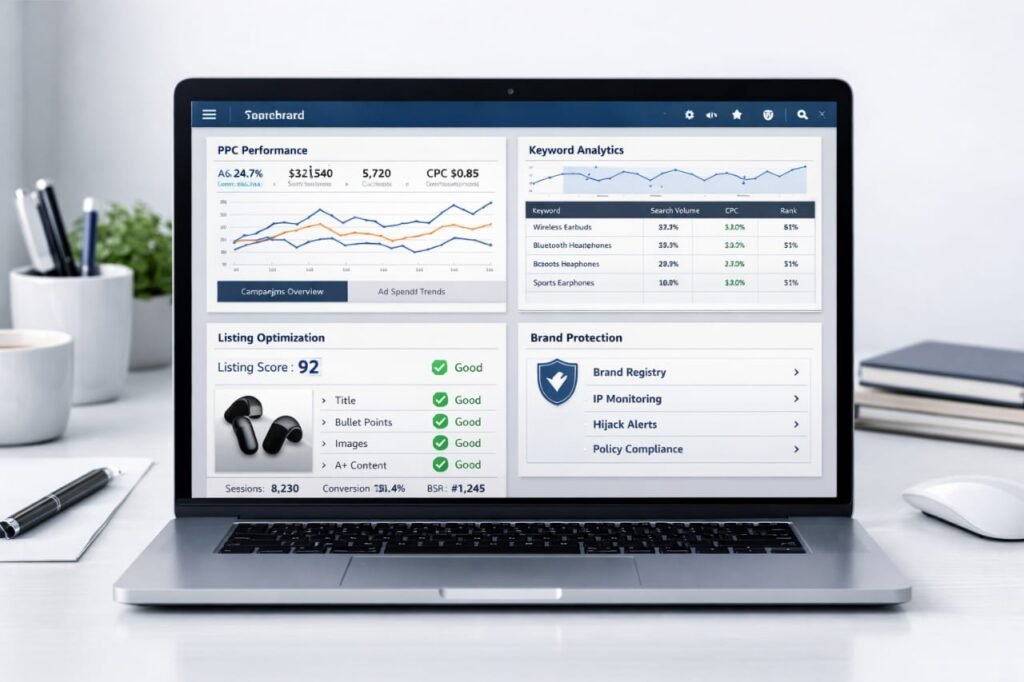
Why Most Amazon Sellers Plateau and How System Led Brands Break Through
Why Most Amazon Sellers Plateau and How System Led Brands Break Through
Introduction:
Many Amazon sellers enter the marketplace with ambition momentum and early traction. Initial growth often feels fast driven by a few winning products aggressive advertising and favorable algorithms. Yet after a certain revenue level growth slows margins tighten and progress becomes inconsistent. This stage is not failure but it is a plateau. Most sellers mistake this phase as a temporary slowdown when in reality it is a structural ceiling caused by operating without systems.
Brands that break through this ceiling do not work harder they work structurally. They shift from reactive selling to engineered operations. This article explains why most Amazon sellers plateau and how system led brands design predictable scalable growth in an increasingly complex marketplace.
Understanding the Amazon Growth Plateau:
The Illusion of Early Momentum:
Early Amazon success often hides operational weaknesses. A single product may rank well due to low competition or favorable timing. Advertising appears efficient because demand is unmet. Inventory seems manageable because scale is limited.
This phase creates a dangerous illusion. Sellers believe growth is tied to effort instinct or constant optimization tweaks. When the market matures and competition increases these assumptions collapse.
What Plateau Really Means:
A plateau is not a lack of opportunity. It is a lack of structure. At this stage sellers face rising advertising costs volatile rankings operational overload and margin compression. The business becomes harder to manage despite stable or growing revenue.
Plateau occurs when growth relies on manual decisions fragmented tools and short term tactics rather than repeatable systems.
Core Reasons Most Amazon Sellers Plateau:
Tactic Driven Growth Instead of Architecture:
Most sellers focus on isolated tactics. They optimize listings launch ads adjust bids and chase trends. These actions are necessary but without integration they create noise not leverage.
Tactics without architecture lead to diminishing returns. Each new action adds complexity but not scalability. Brands stall because effort increases faster than output.
Overdependence on Advertising:
Advertising becomes the default growth lever. When organic momentum slows sellers push more budget into ads. This temporarily maintains revenue but erodes profitability.
Without systems to manage attribution lifecycle bidding logic and demand forecasting advertising becomes reactive spending rather than strategic investment.
Weak Operational Infrastructure:
As order volume grows cracks appear in inventory planning cash flow forecasting supplier coordination and quality control. Stockouts or overstock situations become frequent.
These issues are not caused by growth itself but by the absence of operational systems that scale with demand.
No Clear Decision Framework:
Many sellers make decisions based on intuition or urgency. Product expansion pricing changes and promotional strategies lack a unified logic.
Without defined decision frameworks businesses become inconsistent. Teams or solo operators react to symptoms instead of addressing root causes.
Founder Bottleneck:
In plateaued businesses the founder is the system. Every major decision requires personal involvement. This creates speed limits.
When the founder is overloaded growth stalls because execution cannot keep up with opportunity.
This blog explains how Amazon brands move from short term wins to long term scalable growth.
Apply a proven strategic blueprint designed for serious Amazon brand builders.
Request a Strategic Amazon QuoteThe Shift From Seller to Brand Builder:
Selling Products Versus Building Systems:
Selling focuses on outcomes such as sales rank and revenue. Brand building focuses on inputs such as processes data and feedback loops.
System led brands design how growth happens before chasing more growth.
What System Led Actually Means:
System led does not mean automated everywhere. It means intentional structure. Every critical function follows documented logic measurable inputs and predictable outputs.
This includes product research advertising inventory pricing customer experience and expansion planning.
The Strategic Foundation of System Led Amazon Brands:
Clear Business Model Architecture:
Breakthrough brands define their model precisely. They know how products enter the catalog how capital is allocated and how profit is reinvested.
They are not experimenting blindly. They are executing a defined growth architecture.
Data Hierarchy and Signal Clarity:
System led brands decide which metrics matter most. They separate signal from noise.
Instead of tracking dozens of surface level metrics they focus on contribution margin inventory turnover customer acquisition cost and lifetime value.
This clarity prevents emotional decision making.
Repeatable Product Selection Logic:
Rather than chasing trending products these brands use structured filters. Demand stability competition depth margin resilience and supply chain reliability are evaluated systematically.
This reduces launch risk and increases long term performance.
Advertising as a System Not a Reaction:
Structured Campaign Architecture:
Advanced brands organize advertising into clear intent layers. Discovery performance defense and brand capture each have distinct goals and budgets.
This structure prevents overlap waste and internal competition.
Bid Logic and Budget Governance:
Instead of manual daily changes system led brands use rules based on profitability thresholds and inventory levels.
Advertising spend aligns with business health not emotion.
Attribution Awareness:
They understand how advertising interacts with organic rank brand search and repeat purchase behavior. Decisions consider full funnel impact not just immediate return.
Inventory and Cash Flow as Growth Enablers:
Predictive Inventory Planning:
System led brands forecast demand using historical velocity seasonality and promotional calendars.
Inventory decisions are proactive not reactive. This protects cash flow and ranking stability.
Capital Efficiency Discipline:
Cash is treated as a strategic resource. Reorder quantities payment terms and expansion timing are aligned with return cycles.
This prevents growth from starving the business financially.
Operational Systems That Unlock Scale:
Standard Operating Procedures:
Every repeatable task is documented. This allows delegation consistency and quality control.
Processes replace memory.
Role Clarity and Accountability:
Whether the team is small or growing responsibilities are defined. Outcomes are measurable.
This eliminates confusion and accelerates execution.
Technology Stack Alignment:
Tools are selected based on integration and decision support not novelty.
Data flows cleanly across systems enabling faster smarter action.

Expansion Without Chaos:
Marketplace and Product Expansion Logic
Expansion decisions follow criteria not excitement. Brands assess operational readiness margin impact and brand coherence before expanding.
This prevents dilution and burnout.
Risk Containment Through Modularity
Systems are designed so failure in one area does not collapse the entire operation.
This allows calculated experimentation.
Why System Led Brands Break Through Plateaus:
Predictability Creates Confidence:
When outcomes become predictable leaders can plan invest and delegate effectively.
Growth stops feeling fragile.
Complexity Becomes Manageable:
Systems absorb complexity. As the business grows decision making becomes clearer not harder.
Growth Becomes Scalable:
Because systems scale better than people output increases without proportional effort.
This is the true breakthrough.
Conclusion:
Most Amazon sellers plateau not because they lack skill or effort but because they rely on tactics instead of systems. Growth driven by instinct eventually hits structural limits. Brands that break through design how growth happens. They build decision frameworks operational infrastructure and feedback loops that scale.
In the current Amazon environment sustainable success is engineered not improvised. The future belongs to system led brands.
Is system led growth only for large Amazon brands?
Does system led mean heavy automation?
How long does it take to see results from system led changes?
-
Mary
- December 24, 2025
- 7:08 pm
- Reading time 5 min
Recent Posts
- All Post
- Amazon Compliance
- Amazon FBA Guide
- amazon market analysis
- Amazon PPC
- Amazon Stock
- Amazon Tools
- Business Strategy
- Ecommerce News & Analysis
- Full Account Management Services
- Guide
- Guide 2025
- News
- News 2026
- PPC Services
- Prime day
- Stories
- Team Memebers
- Technology and Digital Services
- Top Agencies
- Top PPC tools
- Why we are Unique?


Get a Quick Solution
Need help fast? Our expert team is here to provide you with efficient and reliable solutions tailored to your needs. Don’t wait—reach out today!
Categories
- Amazon Compliance (5)
- Amazon FBA Guide (6)
- amazon market analysis (2)
- Amazon PPC (30)
- Amazon Stock (1)
- Amazon Tools (17)
- Business Strategy (12)
- Ecommerce News & Analysis (6)
- Full Account Management Services (106)
- Guide 2025 (20)
- News 2026 (16)
- PPC Services (58)
- Prime day (2)
- Technology and Digital Services (1)
- Top PPC tools (1)
- Why we are Unique? (11)
Subscribe for Growth Tips, Seller Hacks & eCom Wins