Key takeaways
- Amazon seller growth practices for 2025
- Growth practice map
- Listing and discoverability
Table of contents
Amazon seller growth practices for 2025
Short answer: durable Amazon seller growth usually comes from listing conversion, disciplined PPC, inventory reliability, policy-safe reviews, and brand clarity - not from "growth hacks" that promise bestseller list placement. Related sales playbook: increase sales on Amazon 2025. Related KPI rhythm: data-driven Amazon growth. Related scale risks: scaling Amazon FBA failure mistakes. Related: Amazon PPC, Amazon PPC strategies, free Amazon audit.
Official seller context: Sell on Amazon - program eligibility should be confirmed.
Growth practice map
| Practice | Purpose |
|---|---|
| Listing quality | CTR and conversion before spending more on ads |
| Bestseller / category scan | Demand and competition signals - not copycat launches |
| Product research with tools | Hypothesis validation; not guaranteed "weeks ahead" prediction |
| FBA ops | Delivery promise and return reduction when it fits margin |
| Reviews within policy | Social proof without review manipulation |
| PPC structure | Controlled discovery and scale with TACOS awareness |
| Selective international | Capacity-dependent expansion |
| Bundles | AOV and differentiation when logistics allow |
| Brand Registry / Store | Defense and branded search when enrolled |
None of these rows guarantees ranking or bestseller badges.
Listing and discoverability
Amazon ranks offers using relevance and performance signals; informal labels like "A10/A11" are not verified Amazon product names here. Practice: natural keywords, strong main and secondary images, mobile-readable titles, and controlled title/creative tests. "70% of Amazon traffic is mobile" is widely repeated and Not yet tested in this project - do not treat as verified.
Bestseller list research
Best Sellers lists can surface category demand patterns. Practice: scan your niche for seasonality and feature gaps; do not treat hourly list moves as a launch mandate. Aligning to trends does not place you on the list.
Research and FBA
- Use research tools to compare demand, competition, and fees - then validate margin
- AI "predicts demand weeks ahead" marketing is unverified
- FBA practice: packaging that reduces damage/returns; stock planning that avoids stockouts
- Prime eligibility can help conversion for some shoppers; it is not automatic dominance
Reviews (policy-safe)
- Use Amazon's allowed messaging / request flows only
- Inserts and incentives that solicit reviews outside Amazon rules risk account health against current policy
- Practice: product and service quality that earns organic reviews
Related: avoid review-manipulation patterns covered in review manipulation on Amazon.
PPC discipline
- Sponsored Products for core search intent
- Sponsored Brands when Brand Registry allows
- DSP is optional advanced reach, not a beginner requirement
- Practice: scale only when contribution margin and TACOS support it
Related: Amazon PPC strategies, fix high ACoS on Amazon PPC.
Expansion, bundles, and brand
- International marketplaces: expand when home-market ops and cash are stable
- Bundles: add clear buyer value; logistics and inventory complexity rise
- Brand: Amazon Store, Brand Registry where eligible, and off-Amazon traffic when capacity allows
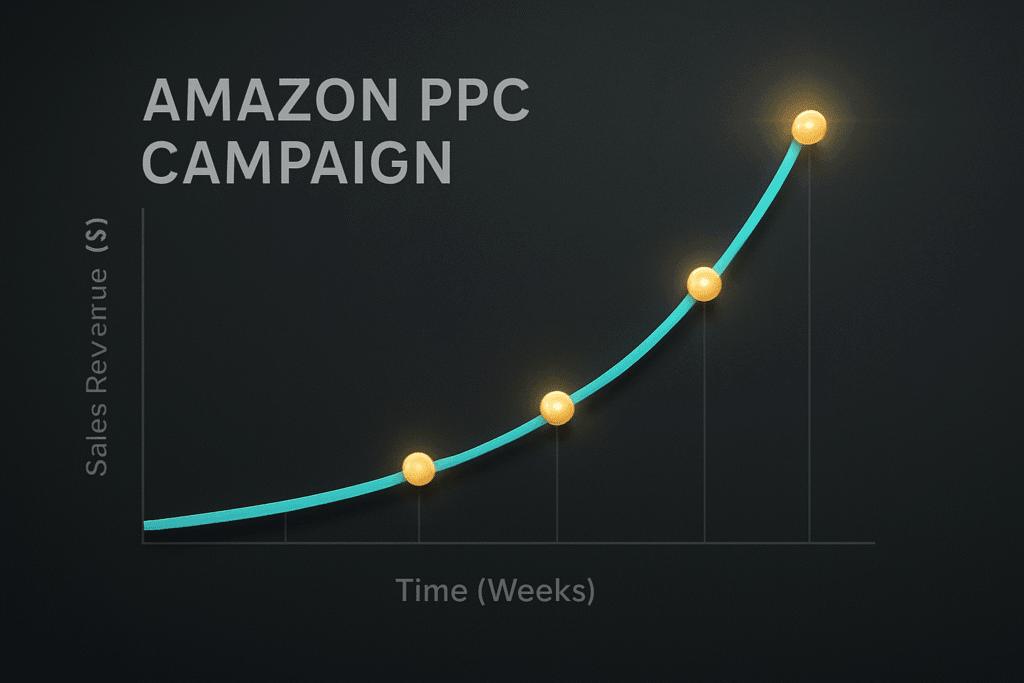
2025 watchlist (not forecasts)
- Stronger personalization and automation in ads
- Continued scrutiny on claims and listing compliance
- "explosive voice search" and virtual try-on ubiquity are not verified for every category
Bottom line
Treat "top growth hacks that work" and "like a pro" marketing as unverified. Sellers who win over time usually improve conversion, ad hygiene, inventory, and brand clarity together.
Request a free Amazon audit or contact eCom Gliders for Amazon growth support.
About the author
Mary
Content Specialist
Mary writes practical Amazon seller guides covering PPC, SEO, listing optimization, and account management.
Keep reading